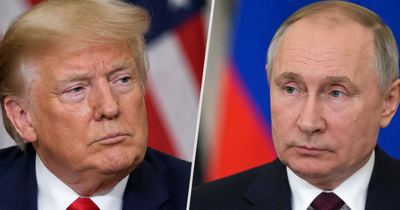
U.S. President Donald Trump is considering lifting sanctions on a Russian state-backed investment fund as his administration explores ways to improve relations with Moscow and persuade Russia to end its war against Ukraine, according to a report by The New York Times.
The newspaper cited an anonymous U.S. official who said the White House was evaluating possible ways to remove the restrictions. Russian officials have also reportedly urged Washington to lift the sanctions, linking their request to a proposed diesel fuel supply agreement that Trump has discussed as part of his engagement with Russia.
The potential move would represent another effort by the Trump administration to use economic incentives as part of its diplomatic approach toward Moscow. However, no final decision on the sanctions has been reported.
According to sources familiar with the discussions cited by The New York Times, Russian officials have sought the removal of U.S. sanctions on the investment fund because of its involvement in a diesel fuel supply arrangement.
The proposal comes as Washington considers whether economic cooperation could help create conditions for progress toward ending the war in Ukraine. Easing restrictions on a Russian state-backed financial institution could provide Moscow with an economic benefit while giving the Trump administration another potential negotiating tool.
The reported discussions remain under consideration, and the available information does not indicate that the United States has formally agreed to lift the measures.
Trump Announces Russian Diesel Supply Agreement
Energy cooperation has featured prominently in Trump’s recent statements about relations with Russia.
On October 9, following a telephone conversation with Russian President Vladimir Putin, Trump said Russia had agreed to supply millions of tons of diesel fuel to the United States and global markets.
“Russia will immediately supply over 300,000 tons of diesel fuel for the American and global markets, another 500,000 tons during November and 1,000,000 tons immediately after that”, Trump wrote on his Truth Social platform.
The announcement placed the proposed fuel deliveries among the economic arrangements discussed in connection with Washington’s contacts with Moscow.
However, the broader supply commitments should be distinguished from individual shipments reported to be heading toward the United States.
Russian Diesel Tanker Heads Toward New York
On October 23, Reuters reported, citing data from the London Stock Exchange Group, that a tanker carrying 40,000 metric tons of Russian diesel fuel was heading toward New York and was expected to arrive in early November.
The vessel, sailing under the Maltese flag, loaded its cargo at the Russian port of Primorsk on the Baltic Sea on October 22. According to the data cited by Reuters, the tanker was scheduled to reach the United States on November 7.
The reported shipment provides a concrete example of Russian diesel moving toward the U.S. market amid the diplomatic discussions. It does not, by itself, establish that all the larger supply commitments announced by Trump have been fulfilled.
Fertilizer Industry Could Also Feature in Economic Discussions
Potential economic arrangements between Washington and Moscow may extend beyond energy.
According to a report published by The Kyiv Independent on October 23, Ukrainian officials are concerned that the Trump administration could consider a proposal involving Russia’s fertilizer industry.
Two people familiar with the matter reportedly said a possible agreement would fit Washington’s broader approach of offering Moscow economic benefits in an effort to persuade the Russian government to end the war in Ukraine.
The reported discussions suggest that the administration may be examining several areas of economic cooperation as part of its diplomatic strategy. However, the details of any potential fertilizer agreement have not been established publicly, and there has been no reported final decision.
For Ukraine, the possibility of easing economic restrictions on Russia raises concerns about the concessions Moscow could receive while the war continues.
Ukraine, Russia and the U.S. Prepare for Possible Talks
The economic discussions are unfolding alongside efforts to arrange another round of diplomatic negotiations involving Ukraine, Russia and the United States.
On October 23, Ukrainian President Volodymyr Zelensky said a new round of trilateral talks was expected to take place during the first half of November. Abu Dhabi was mentioned as one possible location for the meeting.
Two days later, on October 25, Yuri Ushakov, an adviser to Putin on foreign policy, told a state-controlled media outlet that the Kremlin was prepared to resume trilateral negotiations after November 4.
That date marks Russia’s National Unity Day, a public holiday observed annually in the country.
The statements indicated that both sides were discussing the possibility of renewed diplomatic engagement, although the precise timing and location of the proposed talks had not been definitively established in the reported accounts.
Sanctions Relief Remains Under Consideration
Trump’s reported consideration of lifting sanctions on the Russian investment fund reflects the administration’s effort to explore economic incentives alongside diplomatic negotiations.
The proposed diesel deliveries and possible cooperation involving the fertilizer industry could form part of a broader effort to encourage Moscow to make progress toward ending the war in Ukraine.
Nevertheless, important questions remain about the scope of any concessions, the conditions Russia might be expected to meet, and whether sanctions relief would be tied to concrete progress in negotiations.
As of the latest reports cited in this account, the White House had not announced a final decision on lifting sanctions against the Russian investment fund. Any change to the existing restrictions therefore remains a possibility rather than a confirmed policy shift.