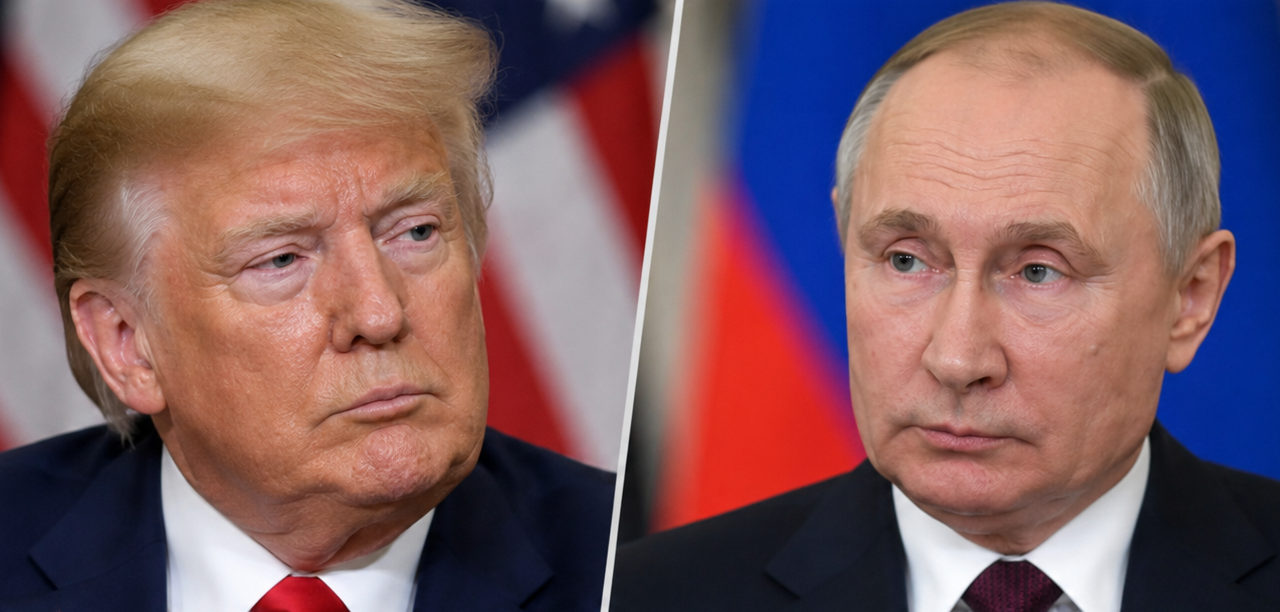
U.S. President Donald Trump has said that a meeting between Russian President Vladimir Putin and Ukrainian President Volodymyr Zelensky could take place “very soon,” raising hopes that renewed diplomatic efforts may help move negotiations toward ending the war in Ukraine.
Speaking to reporters, Trump expressed optimism about the possibility of progress, suggesting that a direct meeting between the two leaders could become an important step in efforts to resolve the conflict, which has continued for years despite repeated international attempts to secure a peace agreement.
“A meeting will take place very soon, and I believe we will be able to make great progress,” Trump told reporters, referring to the diplomatic initiatives aimed at bringing the fighting between Russia and Ukraine to an end.
His remarks come as Washington seeks to revive negotiations that have struggled to advance, with Moscow and Kyiv continuing to disagree over the conditions required for a lasting settlement.
The prospect of a new diplomatic meeting gained momentum after Zelensky said on Sunday that discussions involving Russian and Ukrainian representatives could take place in November under U.S. mediation.
The Ukrainian president indicated that Kyiv remained prepared to participate in negotiations, while emphasizing that certain issues would require direct discussions between the two countries’ leaders rather than being left entirely to technical negotiating teams.
“We are ready to talk. If it is a territorial issue, it must be discussed at the level of leaders. Other issues concern technical groups. So all of this can be discussed in November,” Zelensky said in an interview with state television.
Territorial Disputes Remain a Major Obstacle
Territory is among the most difficult issues facing any attempt to end the war. Russia and Ukraine have maintained opposing positions on territorial questions, making it challenging for negotiators to identify terms that both sides would accept.
Zelensky’s insistence that territorial matters should be discussed directly by the leaders reflects the political importance of the issue for Kyiv. Any agreement involving territory would carry significant consequences for Ukraine’s sovereignty, security and future relations with Russia.
Although the possibility of November negotiations has raised expectations, neither Trump’s comments nor Zelensky’s statements establish that a final agreement is close. The outcome will depend on whether the parties can move beyond their existing differences.
Abu Dhabi Emerges as a Possible Venue for Negotiations
Russia had also announced two days earlier that a meeting involving Russian and Ukrainian representatives was planned for November in Abu Dhabi, the capital of the United Arab Emirates.
The proposed location would provide a setting for renewed diplomatic engagement as the United States attempts to bring the sides back to the negotiating table.
The planned discussions form part of broader efforts to restart peace talks that have remained stalled since the beginning of the U.S.-Israeli war against Iran in late February, according to the source report.
Abu Dhabi’s reported role as a potential venue could offer a neutral setting for discussions between the two sides. However, the announcement of a planned meeting does not necessarily mean that a direct encounter between Putin and Zelensky has been finalized.
Further details about the agenda and the level of representation involved remain important to understanding what the proposed negotiations could achieve.
Previous Negotiations Have Failed to Produce a Breakthrough
The latest diplomatic initiative follows direct talks between Russian and Ukrainian representatives in 2025. Those discussions did not produce a resolution to the conflict, as both sides continued to insist on their respective conditions.
For Washington, encouraging renewed contact between Moscow and Kyiv represents another attempt to find a diplomatic path toward ending the war. Trump’s latest remarks indicate that he believes a new meeting could generate significant progress, although the specific terms of any potential agreement have not been outlined in his public comments.
The positions maintained by Russia and Ukraine will therefore remain central to determining whether the upcoming discussions can deliver concrete results.
Kremlin’s Position Complicates a Direct Putin-Zelensky Meeting
Despite the renewed discussion of negotiations, significant obstacles remain. The Kremlin has so far ruled out the possibility of a meeting between Putin and Zelensky at a location other than Moscow.
That position presents a potential challenge to arranging direct talks, particularly if Ukraine is unwilling to accept Russia’s proposed venue.
The location of a meeting may appear secondary compared with the substance of a peace agreement, but it can carry considerable political significance. For both governments, decisions about where and under what conditions negotiations take place can influence how the process is perceived domestically and internationally.
Until the two sides agree on the format and location of a possible encounter, uncertainty will remain over whether the proposed November discussions could lead to a meeting between the presidents themselves.
Russia Rejects a Ceasefire Before a Substantial Agreement
Another major obstacle concerns the possibility of a ceasefire during negotiations.
Russia has rejected suspending its military operations before a substantial agreement is reached, arguing that a pause in the fighting would give Ukraine an opportunity to rearm.
This position differs from approaches that would seek to stop hostilities first and use the resulting pause to negotiate the terms of a broader settlement. The disagreement over sequencing is significant because it affects the conditions under which meaningful negotiations could take place.
For Ukraine, the terms of any agreement must address the country’s territorial integrity and long-term security. For Russia, the Kremlin has continued to insist on its own conditions before accepting a halt to military operations.