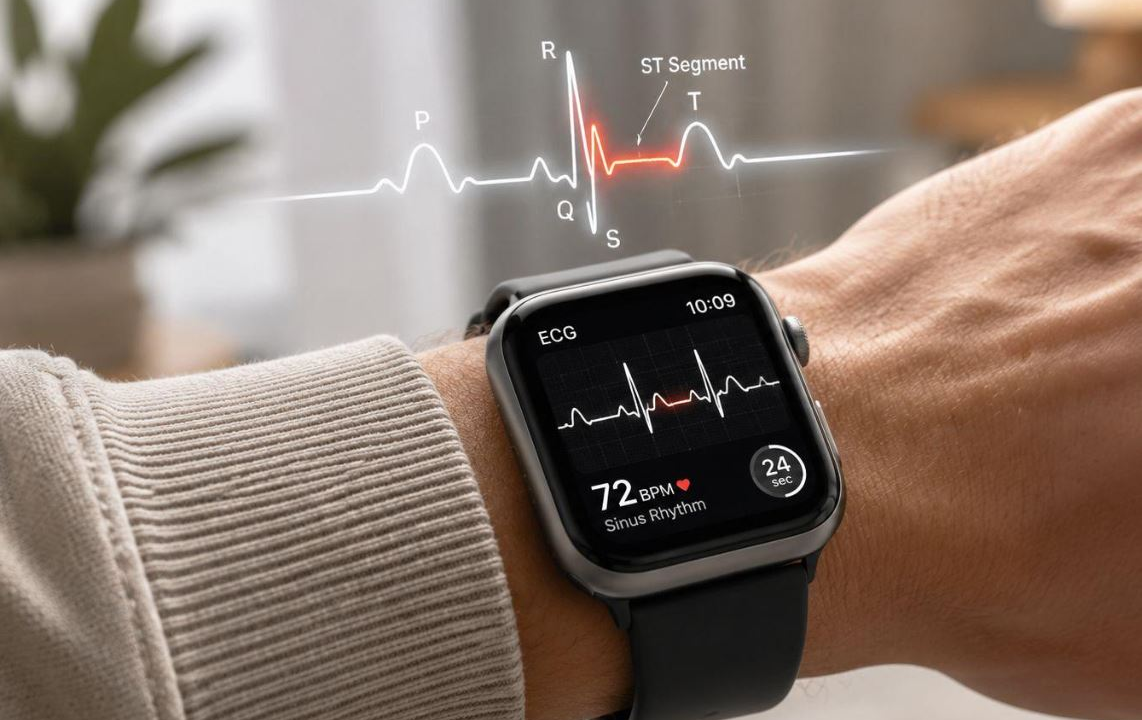
Smartwatches could soon play a bigger role in identifying potentially serious heart conditions, including in people who have no noticeable symptoms. New research suggests that artificial intelligence can analyze electrical signals recorded by wearable devices to detect early signs of weakened heart function, potentially helping doctors identify individuals who need further medical evaluation.
The study, conducted by researchers in South Korea, examined electrocardiogram (ECG) recordings collected using Apple Watch and Samsung Galaxy Watch devices. A total of 2,211 adults scheduled to undergo heart examinations participated in the research.
Using artificial intelligence, the researchers analyzed the electrical activity recorded by the smartwatches to determine whether participants showed signs of reduced left ventricular function.
The left ventricle is the heart’s main pumping chamber, responsible for sending oxygen-rich blood throughout the body.
The AI model demonstrated the ability to distinguish people with reduced left ventricular function from those without the condition. This suggests that information already collected by commonly used wearable devices could potentially offer valuable clues about a person’s cardiovascular health.
Although the findings showed promise, the researchers also identified differences between the two smartwatch platforms.
In approximately 9 percent of participants, the Apple Watch and Samsung Galaxy Watch produced different classifications. In other words, the devices did not always reach the same conclusion when their ECG recordings were analyzed.
The researchers also investigated whether repeating measurements could improve the reliability of the results.
In a separate group of patients, taking repeated measurements helped reduce false-positive results.
However, there was a trade-off. Repeating the measurements also resulted in some genuine cases being missed, increasing the possibility of false-negative results.
Smartwatches Could Help Identify People Who Need Heart Examinations
The potential value of this technology lies in its ability to make preliminary screening more accessible.
They can record ECG signals without requiring someone to visit a hospital each time a measurement is needed.
If further research confirms the accuracy of AI-based analysis, this approach could eventually help identify individuals who might otherwise remain unaware of changes in their heart function.
However, the researchers emphasize that smartwatch-based AI analysis should not be considered a replacement for established medical procedures.
An echocardiogram, which uses ultrasound to examine the heart’s structure and pumping ability, remains an important tool for assessing left ventricular function. A cardiologist must also evaluate the results alongside the patient’s medical history and other relevant findings.
Smartwatch readings alone cannot confirm a diagnosis of heart failure or determine the full extent of a heart problem.
More Research Is Needed Before the Technology Can Be Used Widely
The findings were presented on November 9 at the American Heart Association’s scientific conference, where researchers shared the results of the investigation.
Although the study offers encouraging evidence about the possible role of artificial intelligence in cardiovascular screening, the results are still preliminary.
Larger studies will be necessary to determine how reliably the technology works across different populations, devices and real-world conditions. Researchers will also need to establish how well repeated measurements can balance the risk of false-positive and false-negative results.
The technology is not intended to replace doctors or conventional diagnostic tests. Instead, its potential lies in providing an additional way to recognize warning signs earlier and help direct people toward appropriate medical care.