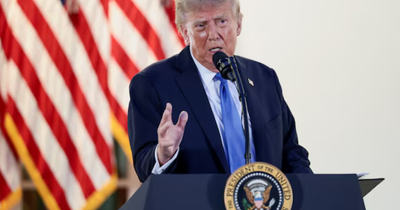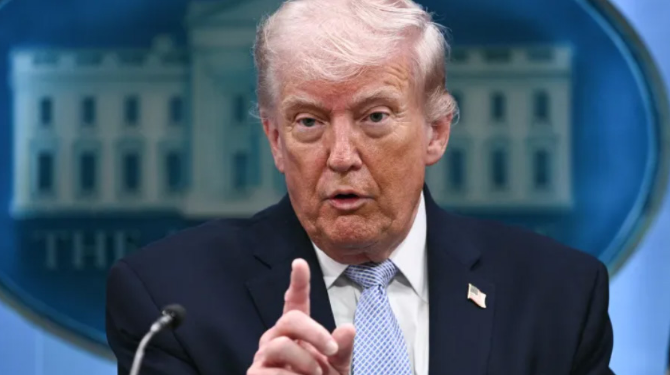
President Donald Trump has issued a blunt warning to lawmakers in Washington, making it clear that he is prepared to use one of his most powerful presidential tools if Democrats and Republicans fail to work together.
“Democrats and Republicans can be very productive if they work together. But if that doesn’t happen, then this is what we do: VETO,” Trump declared.
The warning comes at a politically significant moment for the Trump administration. Democrats have secured control of both chambers of the US Congress following the midterm elections, creating a new balance of power in Washington and potentially making it more difficult for the president to advance his legislative priorities.
With the opposition now holding the advantage in both the Senate and the House of Representatives, the administration could face greater resistance when attempting to pass new laws or push forward its political agenda.
According to the reported figures, Democrats have secured 54 seats in the Senate, including two independent senators who align themselves with the party. Republicans, meanwhile, hold 44 seats.
The difference is also substantial in the House of Representatives, where Democrats have established a considerable advantage. They currently hold 253 seats, compared with 157 for Republicans.
Trump’s Veto Power Could Become a Major Political Weapon
Despite losing the advantage in Congress, Trump still has an important constitutional power that allows him to challenge legislation approved by lawmakers: the presidential veto.
Under the US legislative system, a bill passed by Congress can be sent to the president for approval. If the president disagrees with the proposed legislation, he can reject it by issuing a veto, preventing it from becoming law through the normal process.
Both the Senate and the House of Representatives can override a presidential veto if they secure a two-thirds majority vote in each chamber. This means that even if Trump rejects a bill, lawmakers could still move forward with it if they obtain sufficient support from both sides of Congress.