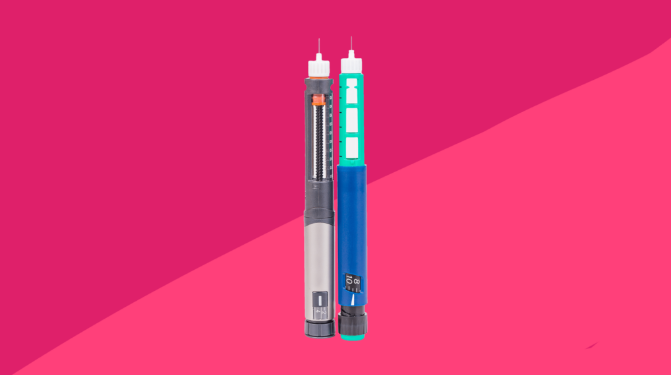
Millions of people use popular medications such as Ozempic, Wegovy, Mounjaro and Zepbound to manage diabetes or lose weight. However, the US Food and Drug Administration (FDA) is now drawing attention to a potentially serious side effect involving one of the body’s most important senses: vision.
The agency announced Monday that it wants manufacturers of certain medications known as GLP-1 receptor agonists to update their safety information to include a warning about a possible increased risk of a rare but potentially sight-threatening eye condition, CNN reported.
The condition, known as non-arteritic anterior ischemic optic neuropathy (NAION), can cause sudden, painless vision loss and may result in permanent damage in some patients. Although the exact underlying cause is not fully understood, the condition is associated with reduced blood flow to the front portion of the optic nerve, which carries visual information from the eye to the brain.
The FDA’s request covers several widely prescribed medications, including Eli Lilly’s Mounjaro and Zepbound, as well as Novo Nordisk’s Ozempic and Wegovy.
The FDA is asking manufacturers to add information about the potential NAION risk to the “Warnings and Precautions” section of their medication labeling.
Eli Lilly addressed the announcement, emphasizing that the FDA’s communication should not be interpreted as a finding specifically involving its medications.
“The FDA’s drug safety communication applies to all drugs with GLP-1 RA activity and does not refer to any findings specific to Lilly drugs. We are carefully evaluating the update and will respond to the FDA promptly,” a Lilly spokesperson said.
Researchers examined nearly 175,000 patients with diabetes who were treated with semaglutide, comparing their outcomes with those of an approximately equal number of patients who received medications from other drug classes rather than GLP-1 treatments.
The results showed that patients taking semaglutide had twice the risk of developing NAION after two years of treatment compared with patients receiving other types of diabetes medication.
However, an increased risk observed in a study does not automatically establish that a medication directly causes the condition.
The FDA’s request for updated warnings does not mean that everyone using Ozempic, Wegovy, Mounjaro or Zepbound faces the same level of risk. Nor does it establish that patients taking these medications will necessarily develop an eye condition.