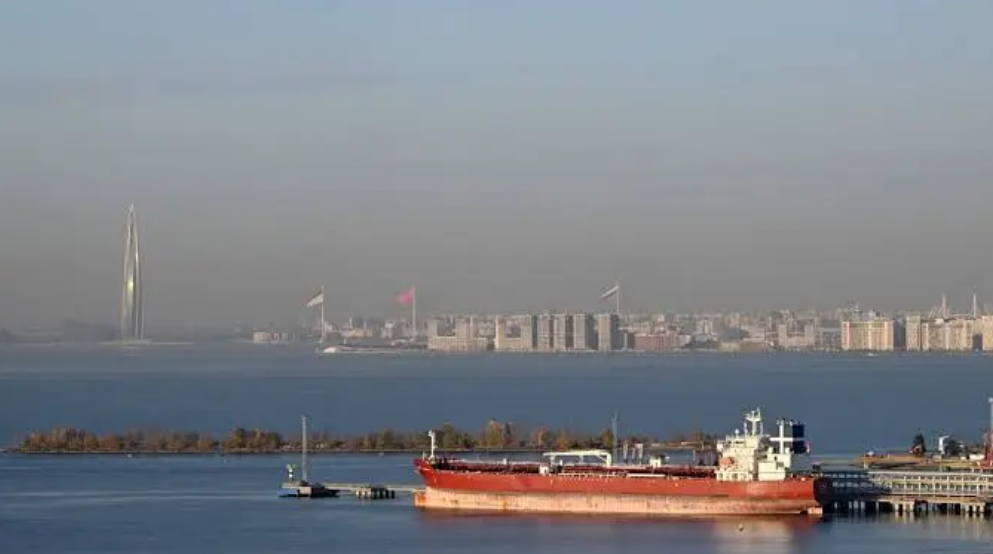
A tanker carrying Russian oil is heading toward New York in what could become the first shipment of its kind to reach the United States since 2022. The voyage comes amid a reported agreement between U.S. President Donald Trump and Russian President Vladimir Putin, raising questions about Washington’s energy policy, sanctions on Moscow, and efforts to bring down fuel prices.
According to Reuters, which cited maritime shipping data published on Friday, the Malta-flagged tanker Agioi Fanendes loaded approximately 40,000 metric tons of very low-sulfur fuel oil at Russia’s Primorsk port on October 22. The vessel is expected to arrive in the United States on November 7, according to data from financial information provider LSEG.
The return of Russian petroleum cargoes to American shores would represent a notable departure from the restrictions introduced under former President Joe Biden. However, the shipment alone does not establish that the United States has abandoned its broader sanctions policy toward Russia.
Trump Seeks to Ease Pressure on Fuel Prices
Trump announced an agreement with Putin earlier in October as his administration sought to address elevated oil prices ahead of the U.S. midterm elections scheduled for November 3.
Increasing supplies could help ease some of these pressures, although the effect of an individual shipment on prices would likely be limited. Oil prices are influenced by a range of factors, including global demand, refinery capacity, production decisions, transportation costs, and geopolitical developments.
Washington Adjusts Its Approach to Russian Oil
As part of the reported agreement, Trump suspended the enforcement of certain provisions of a new U.S. law imposing sanctions on Russia. The move suggests that the administration may be willing to make limited adjustments to its sanctions approach in pursuit of energy-market objectives.
Larger Diesel Deliveries Were Also Announced
On October 9, Trump said Russia would immediately export 300,000 metric tons of diesel fuel, equivalent to approximately 2.25 million barrels, to the United States and international markets.
He also indicated that an additional 500,000 metric tons would be shipped in November, followed by another one million metric tons at a later stage.
If these deliveries proceed as described, they could provide additional supplies to markets experiencing pressure from high fuel costs. Nevertheless, the announced volumes should be distinguished from cargoes confirmed through shipping records, as the available information does not establish that every planned shipment has already been dispatched.
Europe Faces Pressure Over Emergency Fuel Reserves
Trump has threatened to restrict U.S. oil exports to European countries if they fail to release more fuel from their emergency reserves. His position reflects a push for greater availability of energy supplies in the market, with the aim of easing upward pressure on prices.
Any restriction on American exports to Europe could also create complications for international energy trade. European countries rely on a combination of domestic production, imports, and strategic reserves to meet their energy needs, making cross-border supply arrangements an important factor in price stability.
How Russia Redirected Its Oil Exports After 2022
The potential return of Russian oil to the U.S. market would be particularly noteworthy given the changes in Russia’s export routes since the invasion of Ukraine.
The United States banned imports of Russian oil and petroleum products in 2022 as part of its response to the war. The European Union subsequently imposed an embargo on Russian seaborne crude oil and, from February 2023, Russian petroleum products, prompting Moscow to seek alternative buyers.
Turkey, Brazil and African Markets Became Important Destinations
Turkey, Brazil, and several African countries became important destinations for Russian petroleum products. Russia has also continued supplying Central Asian countries through rail transportation.
These changes reshaped international oil trade, with cargoes traveling longer distances and buyers and sellers adapting to new commercial arrangements. Shipping routes, insurance, transportation expenses, and access to financial services have all played important roles in determining where Russian oil can be sold.
However, one shipment does not necessarily indicate a lasting reversal of those trends. Its significance will depend on whether additional cargoes follow, how U.S. authorities apply existing restrictions, and whether the reported agreement leads to a sustained change in trade flows.
What the Tanker’s Arrival Could Mean for Global Oil Markets
The expected November 7 arrival of the Agioi Fanendes will be an important point in assessing the practical consequences of the reported agreement.
If the cargo reaches its destination as scheduled, attention will likely turn to the parties involved, the regulatory arrangements governing the shipment, and whether further Russian fuel deliveries are confirmed.
For consumers, the main question is whether additional supplies can translate into lower prices at the pump. While increased availability can help moderate prices under certain conditions, the effect of a single shipment is unlikely to determine the direction of the broader market.
For now, the tanker’s voyage represents a potentially important development in U.S.-Russian energy relations. Whether it becomes the start of a broader shift or remains an isolated transaction will depend on the cargo’s arrival, the details of the agreement, and the direction of future energy and sanctions policy.