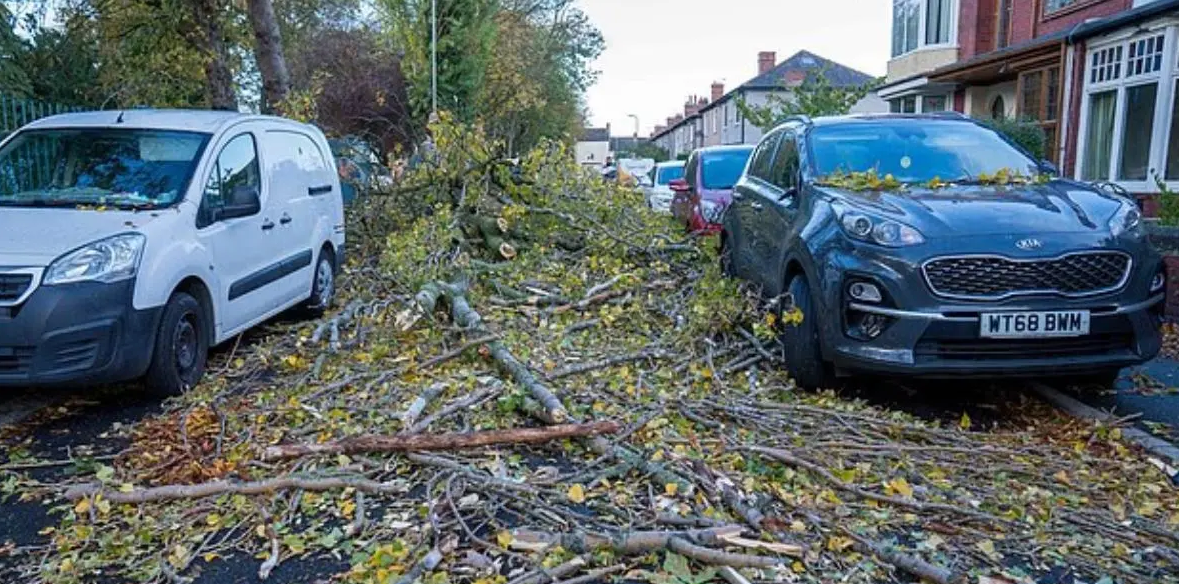
More than 57,000 homes across parts of the United Kingdom were left without electricity on Sunday morning as Storm Boelo brought powerful winds and dangerous weather conditions to the country. The storm prompted weather warnings across northern areas, with gusts exceeding 130 km/h recorded in exposed locations.
The severe conditions developed during the early hours of Sunday, October 25, disrupting electricity supplies and raising concerns about travel, falling trees and damage to infrastructure. Although the strongest winds affected northern parts of the country, other areas also experienced challenging weather as the storm moved through the region.
Storm Boelo is the second named storm of the current storm season. Forecasters had warned residents to prepare for powerful gusts, particularly along exposed coastlines and in areas where strong winds could cause damage.
According to Skynews, electricity network operator SP Electricity North West reported that more than 57,000 households had experienced power cuts across its service area, which includes Greater Manchester, Lancashire and Cumbria.
With strong winds continuing to pose a risk, weather warnings remained in place throughout Sunday, urging people to take precautions while conditions remained unsettled.
More Than 57,000 Homes Hit by Power Cuts
The impact of Storm Boelo was particularly evident across parts of northern England, where thousands of households experienced interruptions to their electricity supply.
SP Electricity North West, the company responsible for distributing electricity across Greater Manchester, Lancashire and Cumbria, reported widespread disruption affecting its network.
Power cuts during severe storms can occur when strong gusts damage overhead power lines, bring trees into contact with electrical infrastructure or interfere with equipment supplying homes and businesses.
For affected residents, losing electricity can create problems beyond the immediate inconvenience of being without lights or household appliances. Homes that rely on electricity for heating, cooking or other essential needs may face additional difficulties when outages continue for extended periods.
Residents experiencing an outage would need to follow updates from their electricity provider for information about restoration work and any continuing disruption.
Dangerous Winds Prompt Orange Weather Warnings
The UK faced a significant threat from powerful winds as Storm Boelo reached its peak during the early hours of Sunday.
Wind speeds generally ranged from approximately 95 to more than 110 km/h in affected areas, equivalent to around 60–70 mph. In particularly exposed coastal locations, gusts were forecast to approach 130 km/h, or approximately 80 mph.
Potential dangers include falling branches, uprooted trees, flying debris and damage to structures. High-sided vehicles may also become more difficult to control, especially on exposed roads and bridges.
The Met Office, the United Kingdom’s national weather service, had issued orange warnings for strong winds covering parts of Scotland, Northern Ireland and northern England from Saturday evening.
The warning affecting the northern parts of the country was scheduled to remain in force until 9 p.m. on Sunday, reflecting concerns that dangerous gusts could continue beyond the storm’s early-morning peak.
Scotland Records Gusts of Approximately 132 km/h
Scotland experienced some of the strongest winds associated with Storm Boelo.
According to the Met Office, the highest reported gust reached approximately 132 km/h, or 82 mph, on the island of Tiree at around 4 a.m. on Sunday.
Tiree lies off the west coast of Scotland and is exposed to strong Atlantic weather systems. Its coastal position makes it particularly vulnerable when powerful winds sweep across the surrounding waters.
Strong winds may continue to affect roads, ferry services and other transport links, depending on local conditions. Falling debris and damage to infrastructure can also create problems after the strongest gusts have subsided.
What Residents Should Know as the Storm Continues
With orange wind warnings remaining in place until Sunday evening, people in affected areas were advised to remain alert to changing conditions.
Avoiding exposed coastal areas during particularly strong gusts can reduce the risk of being caught in dangerous conditions. Residents should also take care around trees, temporary structures and objects that could be blown over or carried by the wind.
Anyone encountering a fallen power line should keep well away and report the hazard to the relevant electricity provider or emergency service. Downed cables should never be approached or touched, even if they appear inactive.
Households affected by power cuts should check updates from their electricity supplier and take care when using alternative sources of lighting or heating. Outdoor generators and fuel-burning equipment should never be operated inside homes or enclosed spaces because of the risk of carbon monoxide poisoning.