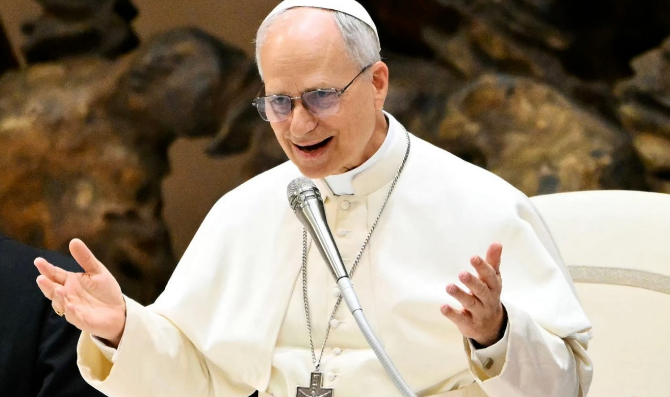
Pope Leo XIV has made history by becoming the first sitting pope known to have voted in a United States general election, marking an unusual moment that connects the leader of the Catholic Church with the democratic process in his home country.
The Vatican confirmed on Friday that the Chicago-born pontiff had submitted a mail-in ballot in Illinois ahead of the November 3, 2026, elections, according to ABC News.
In its statement, the Holy See explained that Leo XIV had consistently exercised his voting rights as a United States citizen whenever he was eligible to do so.
The press office also confirmed that he had participated in elections during his years living in Peru, where he spent more than two decades working as a missionary priest and later serving as a bishop.
The Chicago Sun-Times first reported the development, citing information from the Will County clerk’s office. According to the newspaper, the pope, who is registered at an address in New Lenox, Illinois, requested his mail-in ballot on October 3.
From Chicago to the Vatican: The Background of Pope Leo XIV
Before becoming Pope Leo XIV, the pontiff was known as Robert Francis Prevost. Born in Chicago, Illinois, he spent much of his early life in the United States before beginning a religious career that eventually took him to South America.
His connection to Peru became an important part of his life and ministry. He spent more than 20 years in the country, initially working as a missionary priest before taking on additional responsibilities within the Catholic Church.
During his time there, Prevost served in several religious leadership positions and eventually became a bishop. He also acquired Peruvian citizenship, giving him ties to two countries.
His experience in both the United States and Peru has shaped his international background and provided him with a perspective that extends beyond his birthplace.
When he was elected pope in May 2025, Prevost became the first American-born pontiff in the history of the Catholic Church.
What Makes His Vote Historically Significant?
The significance of Leo XIV’s participation goes beyond the fact that a well-known religious leader cast a ballot.
The pope occupies a unique position in the world. As the head of the Catholic Church and the sovereign of Vatican City State, he leads a global religious institution with followers across numerous countries.
Vatican City itself does not operate like a conventional democratic republic, with citizens choosing their head of state through national elections. The pope is elected through a conclave of cardinals rather than a public vote.
The Vatican’s statement emphasized that voting is both a right and a responsibility, presenting the pope’s participation as an example of civic engagement rather than an endorsement of any political party.
Importantly, the announcement did not indicate support for a particular candidate, political movement or party. The contents of his ballot remain confidential.
The November 3 Elections Carry Important Political Stakes
Leo XIV’s ballot comes ahead of the November 3 midterm elections, which will determine several important political contests across the United States.
In Illinois, voters are expected to decide the state’s gubernatorial race and an open seat in the U.S. Senate, among other local positions.
The elections are also significant nationally because control of Congress is at stake. President Donald Trump is not personally running in the midterms, but the results could influence the political direction of his administration during the remaining years of his second term.
The pope’s participation has attracted attention at a time when voting rights, political divisions and the role of public figures in democratic societies remain subjects of widespread discussion.
For a pontiff who spent much of his life outside the United States before becoming pope, the decision also represents a continuing connection to the country where his life began.
His historic ballot serves as a reminder that even one of the world’s most influential religious figures can maintain ordinary civic responsibilities alongside extraordinary public duties.