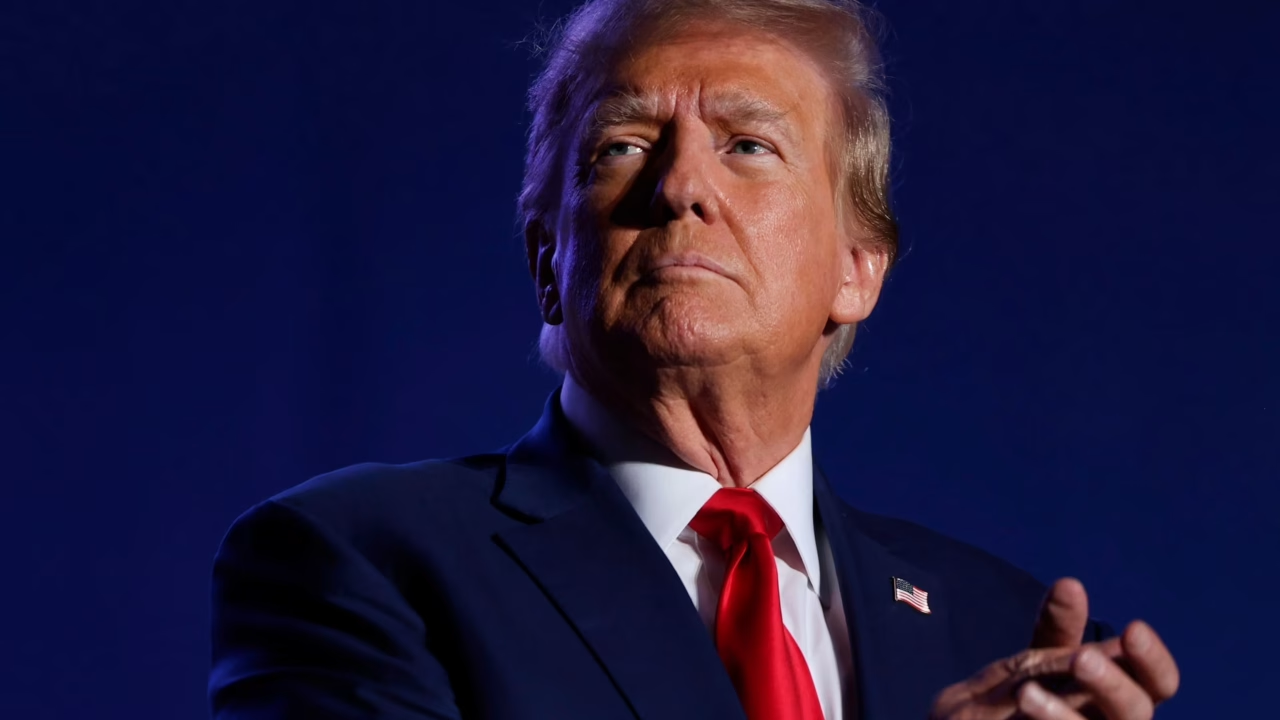
U.S. President Donald Trump has expressed renewed optimism about the possibility of ending the war between Russia and Ukraine, suggesting that the two countries may be closer to a peace agreement than previously thought. Trump said there was a “really good chance” of resolving the conflict, although no formal agreement between Moscow and Kyiv has been announced.
Speaking in an interview with conservative commentator Benny Johnson, published on Saturday, Trump indicated that diplomatic efforts were moving in a positive direction. His remarks reflected his belief that negotiations could eventually bring an end to the fighting, which has continued despite repeated international efforts to secure a settlement.
“I think we’re getting very close to making a deal,” Trump said, referring to the ongoing conflict between Russian President Vladimir Putin and Ukrainian President Volodymyr Zelenskyy.
He also acknowledged the difficult relationship between Putin and Zelenskyy, whose opposing positions have remained major obstacles to diplomatic progress. The disagreement between the two leaders reflects broader differences over the future of Ukrainian territory, security arrangements and the conditions under which a ceasefire or lasting peace could be established.
The president has repeatedly presented ending the war as one of his administration’s foreign policy priorities. However, translating that objective into an agreement acceptable to both Moscow and Kyiv remains a complicated challenge.
Russia and Ukraine have maintained sharply different positions on the terms of a potential settlement. Any agreement would need to address not only the immediate fighting but also the longer-term security and political concerns of both countries.
Trump was also asked whether a peace agreement could emerge during the G20 summit scheduled for December at his Trump National Doral resort in Florida.
The president did not rule out that possibility, suggesting that the conflict could potentially be resolved around the time of the international gathering.
“I think there’s a very good chance that we can get it resolved. We’re also working on a lot of deals,” Trump said.
His response left open the possibility that the summit could provide an opportunity for further diplomatic discussions involving the war in Ukraine. However, he did not confirm whether Putin or Zelenskyy would participate in negotiations at the event or whether a formal agreement was being prepared.
The G20 brings together major economies and provides an international platform for discussions on economic and geopolitical issues. A potential diplomatic breakthrough involving Russia and Ukraine would therefore attract considerable international attention.
Nevertheless, the possibility of reaching an agreement during the summit remains uncertain. Trump’s comments did not establish a specific timetable for negotiations or confirm that either side had accepted proposed terms.
Major Differences Between Moscow and Kyiv Remain
Moscow and Kyiv have fundamentally different expectations regarding how the conflict should end. Territorial control, Ukraine’s future security and the conditions for ending military operations remain among the most sensitive issues.
For Ukraine, any settlement would need to address concerns about its sovereignty and prevent the possibility of renewed Russian aggression. Russia, meanwhile, has maintained demands that Kyiv has repeatedly rejected.
A lasting agreement would also require more than an announcement of a ceasefire. Both countries would need to agree on the terms, while mechanisms for monitoring and maintaining the settlement would be essential to preventing further escalation.
For now, Trump’s statements offer an indication of his administration’s expectations rather than confirmation that a breakthrough has been reached.
Trump Also Discusses Iran and Its Nuclear Ambitions
Beyond the war in Ukraine, Trump addressed Iran during his conversation with Johnson, returning to one of the central foreign policy positions of his administration.
The president reiterated his opposition to Iran acquiring nuclear weapons, maintaining that Washington would not accept such an outcome.
He also claimed that Iran’s military capabilities had been significantly weakened, arguing that the United States remained determined to bring the issue to a conclusion.
Trump did not provide additional details during the interview about the specific measures being considered or the next steps in addressing Iran’s nuclear ambitions.
His remarks nevertheless highlighted how the administration is dealing with several major international challenges simultaneously, including the war in Ukraine and tensions surrounding Iran’s nuclear program.