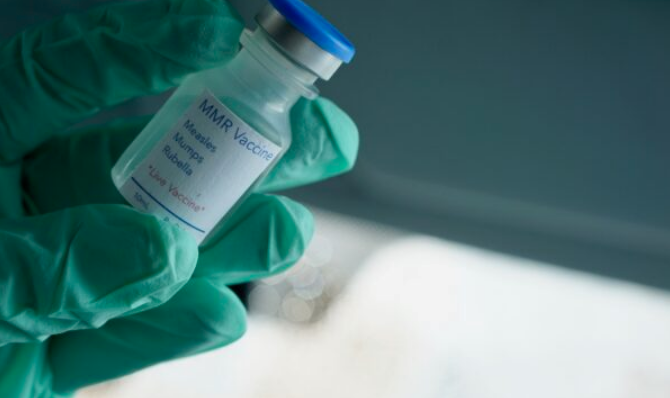
A new study involving more than 2.5 million children in the United States has delivered another significant finding in the long-running debate over childhood vaccinations: researchers found no evidence that the measles, mumps and rubella (MMR) vaccine increases the risk of autism.
The research adds to decades of scientific evidence challenging the widely circulated claim that childhood vaccines can cause autism. Published in The Pediatric Infectious Disease Journal, the study examined the medical records of millions of American children and found no increased risk of an autism diagnosis among those who received the MMR vaccine.
The findings come at a particularly important time for public health in the United States, where measles cases have been climbing and concerns about vaccine misinformation continue to influence discussions among parents and healthcare professionals.
The study was conducted by a team of researchers led by Todd L. Burstain, a physician affiliated with UW Medicine at the University of Washington.
Their primary objective was to determine whether receiving the first dose of the MMR vaccine before the age of two was associated with a greater likelihood of subsequently being diagnosed with autism.
To investigate this, the team compared children who had received their first MMR dose before their second birthday with those who had not yet received it.
The researchers followed the children’s medical records until they reached the age of eight, allowing them to examine autism diagnoses over several years.
After analyzing the data, they found no evidence that vaccinated children faced an increased risk of developing autism compared with those who had not received the vaccine.
The team also examined a booster dose of the pneumococcal vaccine, which is routinely administered during childhood, as an additional part of their analysis. This comparison likewise produced no indication of an increased autism risk.
How the Autism and Vaccine Controversy Began
The controversy can be traced back to a 1998 study that suggested a possible association between the MMR vaccine and developmental disorders in children.
However, the research involved only a very small number of children and subsequently faced serious criticism over methodological problems and ethical violations.
The scientific paper was eventually retracted by the journal that had originally published it.
Although its conclusions were discredited, the claim continued circulating, becoming one of the most persistent sources of misinformation surrounding childhood vaccinations.
Subsequent research involving much larger populations and more advanced scientific methods repeatedly failed to support the original allegation.
Why the Size of the Study Matters
With more than 2.5 million participants, the study gave researchers access to an unusually large population, allowing them to examine potential statistical associations across a broad range of medical records.
The follow-up period was another important feature. By tracking children until age eight, researchers could examine diagnoses made during a significant period of childhood development.
However, the authors also acknowledged that observational studies have limitations.
Differences in how frequently children visit healthcare providers, when they receive vaccinations and how medical professionals record diagnoses can influence statistical findings.
Consequently, even a study involving millions of participants cannot completely eliminate every possible source of bias.
Measles Cases Are Rising Across the United States
The publication of the study coincides with a concerning increase in measles infections across the United States.
According to the Centers for Disease Control and Prevention (CDC), 4,588 measles cases had been confirmed nationwide as of October 22, 2026.
The agency’s figures, updated on October 29, showed that the total had subsequently climbed to 4,852 confirmed cases.
The increase has renewed attention on vaccination rates and the importance of preventing outbreaks of a highly contagious disease.
Measles spreads through the air and can cause serious complications, particularly among young children and people with weakened immune systems.
Potential complications include pneumonia and inflammation of the brain. In severe cases, the infection can also be fatal.
These risks make vaccination particularly important, especially in communities where declining immunization rates can allow the virus to spread more easily.
Why the MMR Vaccine Remains Important
The MMR vaccine protects against three infectious diseases: measles, mumps and rubella.
Health authorities recommend two doses to provide a high level of protection against measles. Vaccination also helps reduce transmission within communities, offering indirect protection to people who cannot receive certain vaccines for medical reasons.
When vaccination coverage falls, viruses can spread more easily, increasing the likelihood of outbreaks and exposing vulnerable members of the population to potentially serious complications.
Public health experts therefore emphasize that maintaining high vaccination rates remains one of the most effective ways to prevent measles from spreading.
What Scientists Know About Autism
Autism is a neurodevelopmental condition that affects how individuals communicate, interact with others and process information.
Its development is complex and involves multiple factors, including significant genetic influences. Scientists continue to investigate the biological mechanisms and other factors that contribute to autism.
However, extensive research has found no convincing evidence that the MMR vaccine causes the condition.
One reason the vaccine controversy has persisted is that some signs of autism become noticeable during the same general period when children receive routine childhood vaccinations.
But the timing of two events does not establish that one caused the other.
Large population studies, such as the latest American investigation, help researchers examine whether a suspected connection exists across thousands or even millions of individuals.
The results are particularly relevant at a time when measles infections are increasing in the United States, highlighting the importance of making healthcare decisions based on reliable scientific evidence rather than unsupported claims.
The study’s conclusion is in line with the broad scientific consensus: the MMR vaccine has not been shown to cause autism, and vaccination remains a crucial measure for protecting children against measles, mumps and rubella.