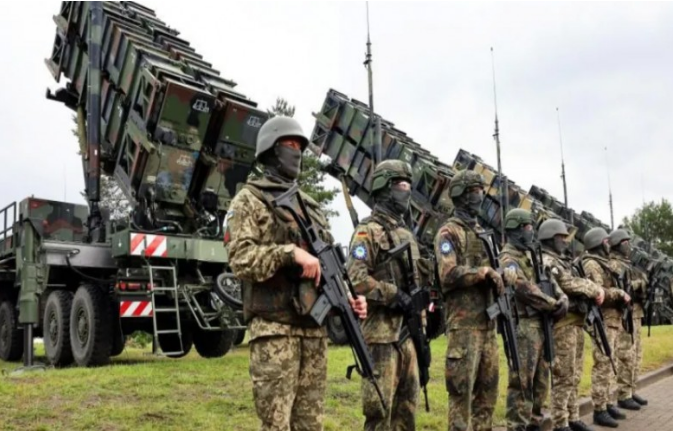
The United States has approved a proposed $2.1 billion sale of 500 advanced Patriot air defense missiles to Ukraine, marking a significant development in Kyiv’s efforts to strengthen its defenses against increasingly intense Russian missile attacks. However, despite the approval, Ukrainian President Volodymyr Zelensky has warned that the country may have to wait several years before receiving the newly purchased weapons.
The decision, announced by the US State Department on Friday, includes 500 advanced PAC-3 Missile Segment Enhancement (MSE) interceptors, ammunition designed to help Patriot air defense systems destroy incoming ballistic and other advanced aerial threats.
The purchase will be financed by Ukraine’s international partners, including Canada, Germany and Norway, alongside funding supported by the European Union. No American government funds will be used for the transaction, according to the State Department.
While the approval represents an important step toward securing additional military equipment, the potential delivery delays have raised concerns in Kyiv. Ukraine is facing continued Russian attacks on its cities, energy facilities and critical infrastructure, making access to advanced air defense ammunition an increasingly urgent priority.
Although Zelensky welcomed Washington’s decision, he made clear that approving the sale and actually receiving the weapons are two very different things.
In a statement on Friday evening, the Ukrainian president expressed concern that deliveries of the 500 interceptors might not begin for several years. He called on American officials to find a way to provide Ukraine with the ammunition it needs much sooner.
Kyiv has repeatedly warned that its existing stocks of Patriot interceptors are under pressure as Russia continues launching waves of missiles against Ukrainian targets.
Zelensky has urged the United States and its European partners to consider transferring some of the Patriot missiles they already have in their military inventories. Those countries could then replenish their own supplies with the newly purchased interceptors once production and deliveries are completed.
Why the PAC-3 Interceptors Matter
The PAC-3 MSE is one of the most advanced interceptor variants developed for the Patriot air defense system.
Unlike traditional air defense missiles that primarily rely on proximity explosions to destroy incoming targets, PAC-3 interceptors use a hit-to-kill approach. This means they are designed to collide directly with an incoming missile, destroying it through the force of impact.
The interceptors are particularly important when defending against ballistic missile threats, which can travel at extremely high speeds and leave defenders with limited time to respond.
Russia has repeatedly used ballistic and cruise missiles in attacks against Ukrainian cities and infrastructure. The ability to intercept these weapons can help reduce the damage caused by strikes targeting power stations, industrial facilities and populated areas.
However, Patriot ammunition is expensive and in high demand internationally. Ukraine must compete with the military requirements of other countries that also depend on the same systems to protect their territory.
Europe and Canada Will Finance the $2.1 Billion Purchase
The proposed agreement is expected to cost approximately $2.1 billion, with international partners covering the expenses rather than American taxpayers.
According to the US State Department, Canada, Germany and Norway will contribute through the American JUMPSTART program, alongside additional funding supported by the European Union’s Ukraine Support Loan.
American defense company Lockheed Martin has been identified as the principal contractor for the proposed sale.
The State Department said the proposed transaction would strengthen Ukraine’s integrated air and missile defense capabilities while supporting American foreign policy and national security objectives.
However, the approval does not mean that all 500 missiles are ready to be shipped. The proposed sale must still go through the required congressional review and subsequent procurement arrangements before the weapons can be delivered.
The manufacturing process also presents a significant challenge. Producing advanced missile interceptors requires specialized components, industrial capacity and considerable time.
Reuters reported that the missiles included in the proposed purchase have yet to be manufactured, with sources indicating that deliveries could extend into the 2030s.
This timeline helps explain why Zelensky is pressing Washington to explore alternative arrangements involving existing military stockpiles.
The announcement comes during a period of strained relations between Washington and Kyiv.
Earlier in October, tensions increased after President Donald Trump made comments suggesting that Ukraine needed new leadership to reach an agreement that could end the war with Russia.
The disagreement also followed a controversial decision by Washington to ease certain restrictions connected to Russian oil transactions as part of efforts involving the supply of Russian diesel fuel.
Kyiv has been concerned about the consequences of decisions that could benefit Moscow while Ukraine continues to face military pressure.
Zelensky has also raised concerns about the time required to approve military equipment already purchased by international partners for Ukraine.