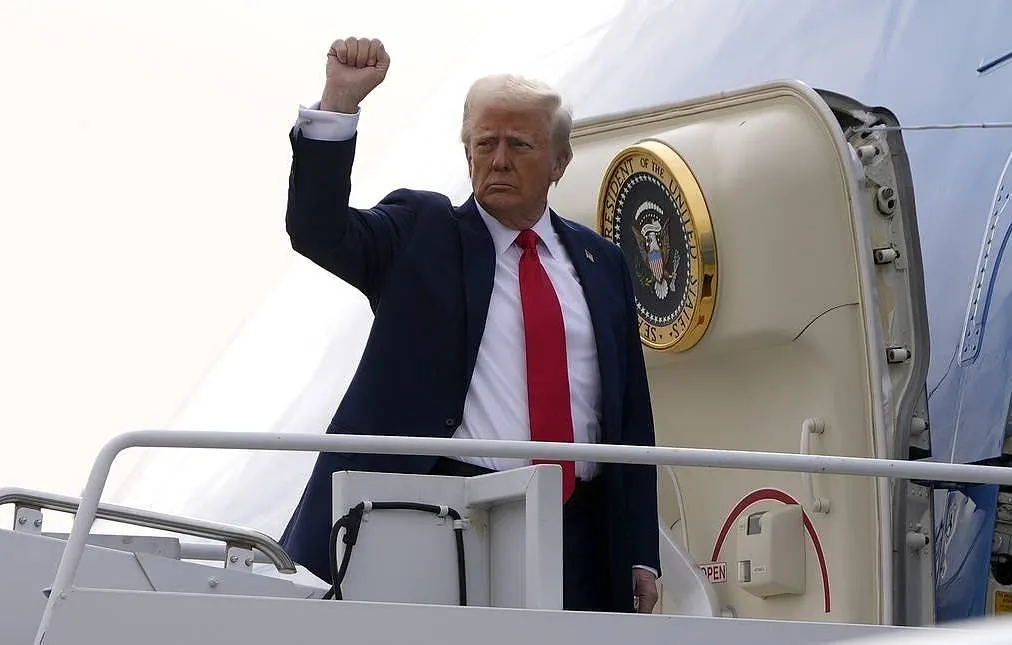
The White House has officially confirmed that U.S. President Donald Trump is managing a chronic health condition that affects circulation and causes swelling in the lower legs. The announcement, made by Press Secretary Karoline Leavitt, comes after growing public speculation about Trump’s appearance in recent days.
According to Leavitt, Trump underwent an evaluation by the White House Medical Unit after visible swelling was noticed around his ankles. Following examinations, doctors diagnosed him with chronic venous insufficiency, a condition where veins in the legs struggle to return blood to the heart efficiently.
What Sparked the Concerns?
Speculation around Trump’s health intensified after reporters observed him appearing in public with areas of his hands covered in makeup. Photographs showed discoloration and swelling, which some mistook for bruises or signs of a more serious illness. These images quickly circulated online, sparking discussions about his wellbeing.
The White House clarified that the makeup was used to cover mild skin changes, likely related to his condition. Officials reassured the public that while Trump does face a chronic medical issue, it does not pose an immediate or life-threatening risk.
Understanding Chronic Venous Insufficiency
Chronic venous insufficiency (CVI) is a relatively common condition, especially among older adults. It occurs when valves in the leg veins become damaged or weakened, preventing blood from flowing smoothly back to the heart. Instead, blood pools in the veins, leading to swelling, pain, and skin changes.
Symptoms and Risks
People living with CVI may experience:
- Swelling in the ankles or lower legs
- Heaviness or aching after standing for long periods
- Skin discoloration or irritation
- Varicose veins or visible vein enlargement
While the condition is usually manageable, untreated cases can sometimes lead to complications such as venous ulcers or blood clots.
Treatment and Lifestyle Adjustments
Medical experts note that CVI can be controlled through lifestyle changes, compression therapy, and, in some cases, minor procedures. Regular physical activity, maintaining a healthy weight, and elevating the legs can significantly reduce symptoms. Doctors often recommend compression stockings to help blood circulation.
The White House has not disclosed Trump’s specific treatment plan, but officials emphasized that he remains under continuous medical supervision.
A Pattern of Health Scrutiny
Donald Trump’s health has been a subject of debate and speculation since his first term in office. His medical reports have often been released selectively, fueling both curiosity and concern.
During his 2016 campaign, Trump’s physician at the time, Dr. Harold Bornstein, described his health as “extraordinary,” though later admitted the statement was partly dictated by Trump himself. In 2020, when Trump contracted COVID-19, questions about transparency in health updates again dominated headlines.
This latest disclosure represents a rare moment of openness about his medical condition, though the White House continues to insist there is no cause for alarm.
Political Implications of a Health Disclosure
In the United States, a president’s health is not merely a personal matter it often becomes a political issue. Any sign of vulnerability can influence public perception, campaign strategies, and even global confidence in leadership.
Analysts suggest that the decision to publicly acknowledge Trump’s diagnosis may have been strategic. By addressing the rumors directly, the administration could be attempting to minimize speculation and demonstrate transparency.
Political rivals, however, may use the disclosure to question Trump’s ability to endure the physical demands of the presidency, especially as the nation faces domestic and international challenges.
Public Reaction and Media Attention
The announcement has received widespread media coverage, with reactions ranging from sympathy to skepticism. Supporters argue that Trump, known for his resilience and demanding schedule, is more than capable of managing the condition. Critics, meanwhile, point to the lack of detailed medical records, arguing that the public deserves fuller disclosure.
Social media has amplified the debate, with hashtags related to Trump’s health trending shortly after the news broke. Medical professionals have also weighed in, emphasizing that CVI is common and not necessarily debilitating, particularly when treated properly.
What Comes Next for Trump’s Health?
The White House has promised to provide updates as needed but has stopped short of committing to releasing detailed medical reports. Trump, known for projecting strength and stamina, has not publicly commented on the diagnosis.
Health experts say that if properly managed, chronic venous insufficiency should not significantly interfere with his daily responsibilities. However, the condition does serve as a reminder of the natural health challenges that come with age particularly for someone under the pressures of the presidency.
Conclusion: Transparency and Trust
The revelation of President Trump’s health condition highlights the delicate balance between transparency and privacy in political life. While the White House insists there is no serious cause for concern, the disclosure has reignited debates about the importance of open communication regarding a leader’s medical status.
As the situation develops, Americans and the world will be watching closely. For now, the official message is clear: Trump remains fit to lead, though under the careful eye of his medical team.