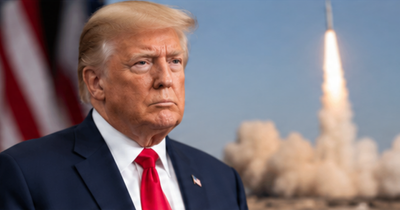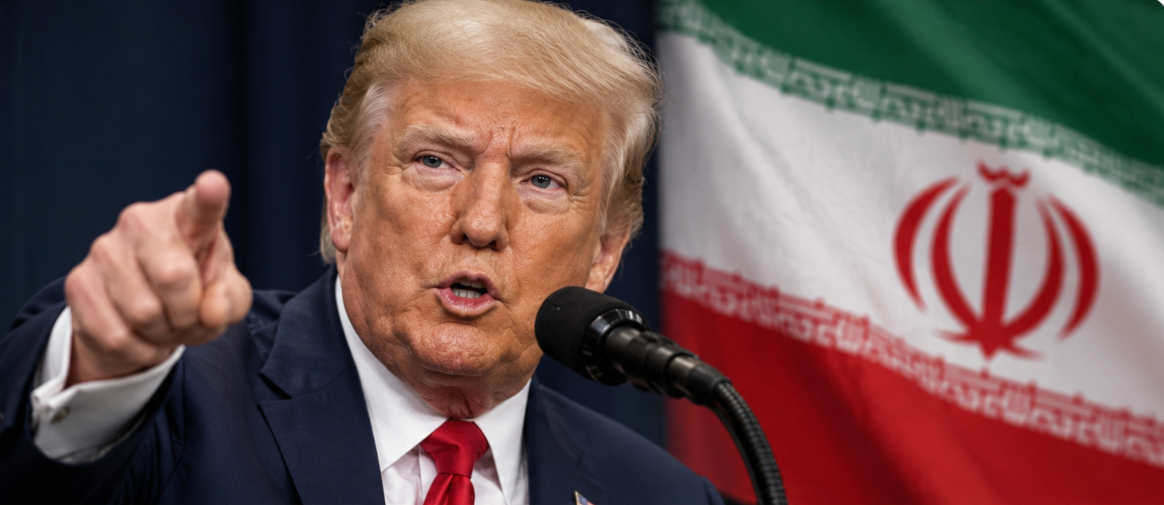
U.S. President Donald Trump has renewed his warning to Iran, presenting Washington with what he described as a critical choice: reach a diplomatic agreement with Tehran or bring the confrontation to an end through military force.
Speaking in an interview with American television network Fox News, Trump reiterated that the United States must decide whether to continue pursuing negotiations with Iran or take military action to resolve the ongoing standoff. His remarks underscore the pressure surrounding efforts to reach a diplomatic solution as tensions between the two countries remain high.
“Should I make a deal or should I finish them off? That’s the only question,” Trump said, framing the next steps in the confrontation as a decision between an agreement and a more aggressive approach.
The president also addressed developments in the Strait of Hormuz, one of the world’s most strategically important maritime routes for international energy shipments. Trump claimed that the United States holds the upper hand in the confrontation, suggesting that Washington’s position gives it significant leverage over Tehran.
His comments come amid continued uncertainty over the direction of U.S.-Iran relations, with diplomacy still a possible path forward but the threat of military escalation remaining a central concern.
Trump Puts Pressure on Tehran Over a Potential Deal
Trump’s latest statements reflect his administration’s approach of combining the possibility of negotiations with warnings of serious consequences if an agreement cannot be reached.
By describing the situation as a choice between making a deal and ending the confrontation through force, the president signaled that Washington is weighing its options while maintaining pressure on the Iranian government.
The remarks do not, by themselves, confirm that a decision to launch a new military operation has been made. Instead, they highlight the uncertainty surrounding the next phase of the standoff and the competing possibilities of diplomatic engagement and further confrontation.
Diplomacy Remains an Uncertain Path
A negotiated agreement could offer both sides a way to reduce tensions without allowing the situation to develop into a broader military conflict. However, reaching such an arrangement would depend on the issues under discussion, the demands made by Washington and Tehran, and each government’s willingness to accept compromises.
The United States and Iran have long been at odds over a range of security and regional issues. Their relationship has been shaped by disputes over Iran’s nuclear program, economic sanctions, regional influence and military activities.
Trump’s latest comments suggest that the administration wants to preserve the possibility of an agreement while making clear that it is also considering other options.
Strait of Hormuz Remains a Strategic Flashpoint
Beyond the diplomatic dispute, Trump drew attention to the Strait of Hormuz, a narrow waterway connecting the Persian Gulf with the Gulf of Oman and the wider Arabian Sea.
The passage is essential to international energy markets because substantial volumes of oil and other energy supplies move through it. Its strategic importance means that any disruption could have consequences extending far beyond the Middle East.
Trump claimed that the United States was in a position of strength in the area, declaring, “We take everything, they get nothing.” The statement reflected his assessment of Washington’s leverage in the confrontation, although it should be understood as the president’s characterization rather than independent confirmation of complete American control over the waterway.
Why the Waterway Matters to Global Energy Markets
The Strait of Hormuz is a critical route for oil-producing countries in the Persian Gulf that depend on maritime exports to reach international customers. Energy-importing economies in Asia and elsewhere are particularly sensitive to developments affecting shipments through the passage.
Any serious threat to commercial shipping could increase uncertainty among traders, shipping companies and energy producers. Depending on the scale and duration of a disruption, oil prices could face upward pressure as markets respond to concerns about supply.
The impact would not necessarily be limited to crude oil. Higher energy costs can also affect transportation, manufacturing and the production of goods, potentially creating additional economic pressure for countries that rely heavily on imported fuel.
A military confrontation in or around the waterway could also raise concerns about the safety of commercial vessels and the wider security of regional maritime routes.
Military Escalation Could Have Wider Consequences
Although the president has emphasized the possibility of reaching an agreement, his language also highlights the risk that negotiations could give way to a more confrontational approach.
Any decision involving military action would carry consequences beyond the immediate parties. An escalation could increase regional instability, create additional risks for shipping and energy infrastructure, and complicate diplomatic efforts involving other countries.
It could also place pressure on global markets, particularly if traders begin to anticipate interruptions to oil supplies or a prolonged period of uncertainty in the Persian Gulf.
The outcome will depend on the decisions made by both governments and whether they can identify terms that address their competing interests.