U.S. President Donald Trump has renewed his warnings toward Cuba, saying Washington will turn its attention to the Caribbean nation after dealing with Iran. Speaking at a political rally in Florida, Trump suggested that American warships returning from the Middle East could stop near the island, before Secretary of State Marco Rubio steps in to help finalize an agreement.
The remarks have raised fresh questions about the Trump administration’s strategy toward Cuba, whose communist government has faced increasing pressure from Washington. They also come as the United States continues its military campaign involving Iran and tensions across the Middle East remain high.
However, he did not announce a specific military operation against the island, and his description of American ships stopping near the Cuban coast does not establish that an intervention has been formally planned.
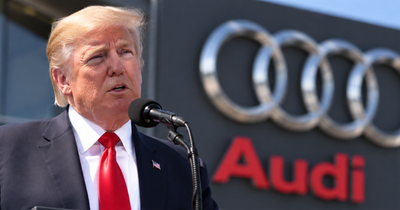
Speaking to supporters in Fort Myers, Florida, on October 23, Trump described a scenario in which U.S. naval forces would pass by Cuba on their return from the Middle East.
He also suggested that one of the American ships could stop close to the Cuban coastline before Rubio was sent to complete what Trump described as a deal.
“We’ll take care of Cuba on our way back from Iran,” Trump said, outlining his vision for how the United States could approach the island.
Trump has repeatedly argued that Cuba’s political system needs fundamental change. His latest remarks appeared to reinforce that objective, although he did not provide a detailed timetable or explain what specific agreement he expects Cuban authorities to accept.
Marco Rubio Could Play a Central Role
Secretary of State Marco Rubio is expected to remain an important figure in Washington’s Cuba policy. Rubio, whose family has Cuban roots, has long taken a hard-line position toward the communist government.
Trump indicated that Rubio would be responsible for completing an agreement after the American ships passed near the island.
The president’s comments did not clarify whether he was referring to diplomatic negotiations, political concessions from Havana or a broader strategy involving economic and military pressure.
Rubio also issued a message calling on Cubans who want political change to take advantage of what he portrayed as an opportunity to challenge corruption and the existing leadership. His statement added to the impression that Washington is seeking to encourage political change inside Cuba, rather than limiting its approach to diplomatic disagreements.
U.S. Pressure on Cuba Intensifies Amid an Energy Crisis
The latest warning comes as Cuba faces severe economic difficulties, including fuel shortages, electricity blackouts and pressure on essential services.
Cuba has faced prolonged economic difficulties, aging infrastructure and persistent energy shortages. U.S. restrictions targeting oil supplies have added to the pressure, making it more difficult for the island to secure the fuel needed to maintain electricity generation and support households, businesses and public services.
Fuel Shortages Affect Daily Life
Reliable access to fuel is essential for Cuba’s electricity system, transportation network and many other parts of its economy.
When fuel supplies become limited, the consequences can extend beyond gasoline availability. Power plants may struggle to maintain electricity production, transportation services can be disrupted, and businesses may find it harder to operate normally.
Repeated blackouts also affect hospitals, schools, food storage and other essential services. For families, prolonged electricity cuts can complicate everyday activities, while businesses face additional costs and uncertainty.
The worsening energy situation has increased pressure on the Cuban government to find alternative sources of fuel and stabilize electricity supplies.
Washington, meanwhile, has argued for major political changes on the island. Critics of the U.S. approach have warned that restrictions affecting essential supplies can deepen the hardship experienced by ordinary Cubans, regardless of their views toward the government.
Could American Warships Actually Stop Near Cuba?
Trump’s description of U.S. naval vessels approaching Cuba has attracted attention because of the possible military implications.
The president portrayed a situation in which an American ship would stop approximately 50 yards from the Cuban coast and Cuban authorities would effectively surrender before Rubio completed an agreement.
The scenario was presented as part of his remarks at the rally. It should not be interpreted as confirmation that the U.S. military has received orders to carry out such an operation.
No detailed operational plan was announced in the remarks, and the president did not explain how Cuban authorities would respond to the hypothetical arrival of American naval forces.
A military confrontation would carry significant diplomatic and security risks. Any attempt to use naval power to force political concessions could provoke a response from Havana and draw international attention to the longstanding dispute between the two countries.
For now, Trump’s remarks provide an indication of his administration’s rhetoric and stated ambitions toward Cuba, rather than a clear picture of what steps Washington may take next.