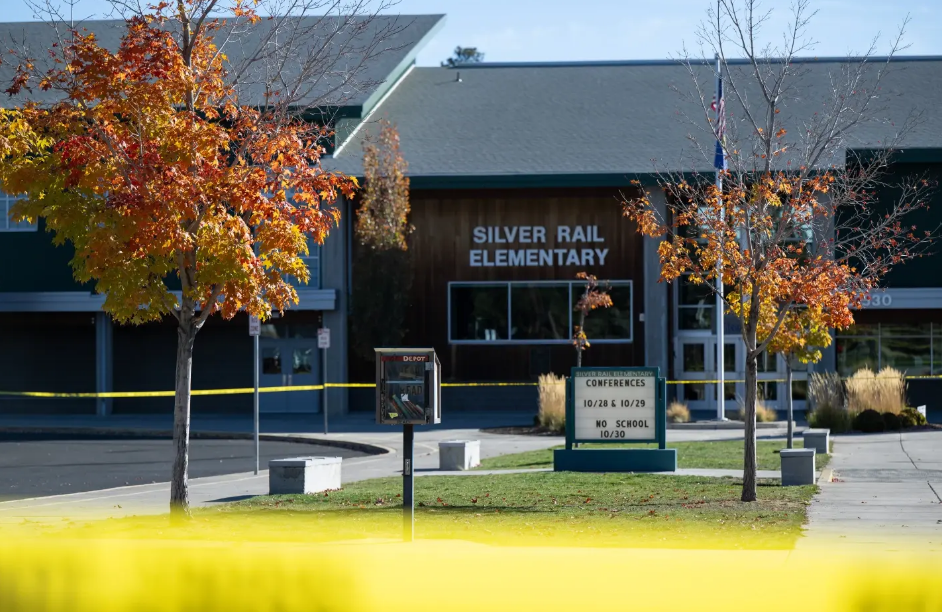
A 54-year-old teacher who survived a deadly shooting at Silver Rail Elementary School in Bend, Oregon, has described how she pretended to be dead after being shot, hoping the gunman would leave her alone.
Becky Drury, who was seriously injured during the incident, said she had little time to react when the gunman approached her classroom. As she attempted to close the door to protect those inside, she was shot and fell to the floor.
According to the BBC, Drury was shot while attempting to close the classroom door. She fell to the floor and pretended to be dead, hoping the attacker would not shoot her again. She suffered serious but non-life-threatening injuries in the shooting, which killed three children, aged 5, 8 and 11, and 25-year-old teacher Megan Lambert.
“I did the only thing I could do: I pretended to be dead, hoping he wouldn’t shoot me again,” Drury said.
Her words offer a glimpse into the split-second decisions people may face during a violent emergency. With little opportunity to escape or defend herself, she chose to stay still and hope the gunman would move on without attacking her again.
A Desperate Attempt to Stay Alive
Her account highlights the fear and uncertainty experienced by people caught in shootings, particularly in places such as schools, where teachers are responsible for the safety of children as well as themselves.
Although Drury survived, the physical and emotional consequences of such an experience can extend well beyond the immediate danger. Survivors of violent incidents may face a difficult recovery, including the challenge of processing what happened and returning to everyday routines.
The details shared by Drury also underscore the risks faced by school staff during emergencies. Teachers may have to make rapid decisions about protecting students, securing classrooms and responding to an immediate threat, often without knowing how the situation will develop.
Three Children and a Young Teacher Were Killed
The deaths of the three children have made the incident especially devastating for families and the wider school community. For parents, the loss of a child is an unimaginable tragedy, while classmates and educators must confront the sudden absence of people who were part of their everyday lives.
Lambert’s death also represents a profound loss for the school’s staff and students. Teachers play an important role in creating a safe and supportive learning environment, and the death of a young educator in a school shooting can have lasting consequences for colleagues and the community she served.
The Lasting Impact of School Shootings on Survivors
Drury’s account is a reminder that surviving a shooting does not necessarily mean escaping its consequences. While her injuries were not considered life-threatening, the experience of being shot while trying to close a classroom door is likely to remain a significant event in her life.
For survivors, recovery can involve medical treatment, rehabilitation and emotional support. The needs of each person differ, and some may require assistance long after their physical injuries have healed.
Children who witness violence or lose classmates and teachers may also need support as they process grief and fear. Parents and school officials often face the difficult task of helping young people understand a traumatic event while restoring a sense of stability.
Schools affected by shootings may need to provide counseling services, communicate with families and carefully plan how students and staff can return to a familiar environment after a tragedy.