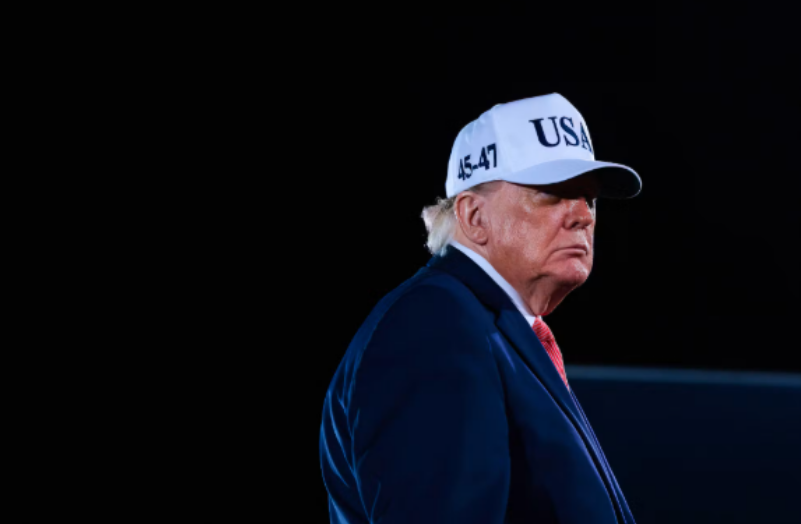
President Donald Trump has reportedly considered the possibility of transforming the White House press briefing room into a swimming pool, raising fresh questions about the future of the space used by journalists to cover the US presidency. The idea comes amid a long-running dispute between Trump and the media, as the president has repeatedly questioned the role of reporters inside the White House.
According to reports, Trump has previously considered restricting journalists’ access to the White House entirely. Instead of maintaining the existing press briefing room, he has floated the idea of converting the space into a pool, although it remains unclear whether the proposal will lead to any concrete renovation plans.
The discussion gained attention in late September when Trump shared a photomontage on his Truth Social platform showing the current press briefing room alongside an image of a luxurious swimming pool. The post prompted questions about whether the president was simply sharing an idea or signaling a potential change to the White House’s facilities.
For now, there is no confirmed indication that construction work is planned or that journalists will be removed from their current workspace.
Trump’s reported interest in replacing the press briefing room reflects a broader, years-long tension between his administration and the journalists who cover it. Since his first term, from 2017 to 2021, Trump has repeatedly criticized media coverage and challenged established practices surrounding White House press access.
The Wall Street Journal reported several weeks before the late-September social media post that Trump had considered excluding all journalists from the White House. The newspaper cited several government officials familiar with the discussions.
Such a move would represent a significant change to the way reporters work at the center of the US government. Journalists stationed at the White House regularly attend briefings, question administration officials and report on decisions involving domestic policy, foreign affairs and national security.
What Trump Shared on Truth Social
In late September, Trump posted a photomontage on Truth Social that depicted the existing White House press briefing room and a luxurious swimming pool. The image drew attention because the room is closely associated with daily political reporting and the relationship between the president and the media.
However, the image alone does not establish that a renovation has been approved. No specific construction timetable or confirmed plan was included in the information surrounding the proposal.
It also remains unclear whether the swimming pool idea is intended as a serious architectural possibility or was shared primarily to express Trump’s position toward the press corps.
Until further details emerge, the future of the briefing room remains uncertain. Any major change would raise practical questions about where White House correspondents would work and how regular press briefings would be conducted.
The History Behind the White House Press Briefing Room
The room at the center of the discussion has an unusual history. According to the original report, the press briefing room was established in 1970 on the site of a swimming pool that had been used by former President Franklin D. Roosevelt for health-related reasons.
Roosevelt, who served as president from 1933 until his death in 1945, used swimming as part of his personal health routine. The former pool was later covered over, creating the space that would eventually become a central location for White House press briefings.
Today, the briefing room serves as a familiar setting for announcements, exchanges between reporters and administration officials, and questions about major developments in American politics.
A Central Space for Political Reporting
The press briefing room is more than a meeting space. It provides a regular setting where journalists can seek explanations, challenge official statements and ask questions on behalf of the public.
Briefings held there can attract national and international attention, particularly when officials address major political controversies, diplomatic developments or government decisions.
Alongside the briefing room, a nearby office area accommodates accredited journalists who cover the White House. These reporters work to gather information, speak with officials and deliver news to audiences around the world.
If the facilities were substantially altered or access were restricted, the consequences could extend beyond the physical space itself. Reporters would need to understand where they could work, how they would attend briefings and whether existing arrangements for questioning officials would change.
What Could Happen Next?
At this stage, the proposal remains uncertain. Although Trump’s Truth Social post brought the swimming pool idea into public view, there is no confirmed evidence that the White House has approved a conversion project.
The possibility of excluding journalists also remains a separate question from the proposed renovation. The two ideas are related in the reports, but neither should be treated as an implemented policy without an official announcement or further evidence.
For White House correspondents, the main concern is whether the discussion will result in practical changes to their access, workspace or opportunities to question the administration.
The press briefing room has served as an important part of the White House’s media operations for decades. Whether it will continue in its current form, undergo changes or become the subject of a formal renovation proposal remains to be seen.
For now, Trump’s suggestion has drawn attention to both the unusual history of the room and the continuing debate over the relationship between the presidency and the journalists responsible for covering it.