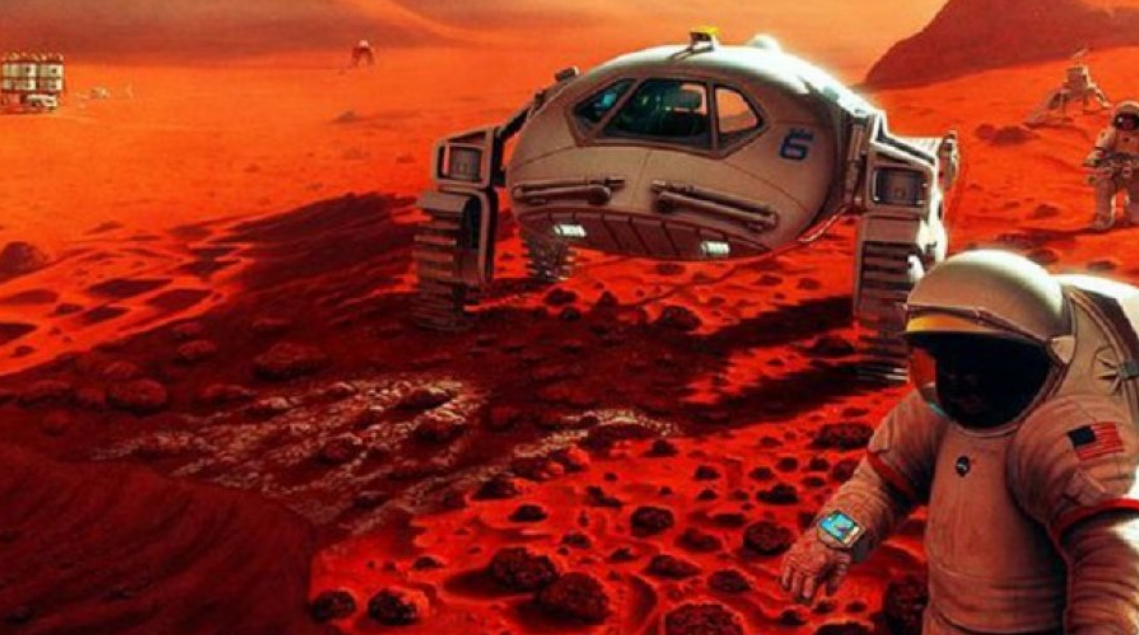
A compound found in red wine could offer a promising way to protect astronauts from muscle loss during long-duration space missions, including future journeys to Mars. The substance, known as resveratrol, has shown encouraging results in animal experiments, suggesting that nutrition could play an important role in maintaining muscle health in low-gravity environments.
The findings are particularly relevant as space agencies prepare for missions that could keep astronauts away from Earth for months at a time. Prolonged exposure to reduced gravity can weaken muscles and bones, creating physical challenges that may affect astronauts during their journey and after they return to normal gravitational conditions.
Resveratrol is a naturally occurring compound found in red grapes and several other plants. It has attracted scientific interest because of its antioxidant properties and its potential effects on metabolism and cellular health.
A study published in the scientific journal Frontiers in Physiology examined whether resveratrol could help preserve muscle mass and strength under conditions resembling the reduced gravity experienced on Mars.
The research was conducted by a team from Harvard University, coordinated by Marie Mortreux. The experiments involved animals exposed to simulated low-gravity conditions, allowing researchers to investigate how the compound might influence muscles when normal gravitational forces are reduced.
The results suggested that resveratrol could help limit some of the negative effects of reduced gravity on muscle tissue. Researchers linked these potential benefits to improved insulin sensitivity, which plays an important role in how the body regulates energy and supports muscle function.
Although the findings are encouraging, the research remains at an experimental stage. Further studies will be needed to establish whether similar effects could occur in humans during actual spaceflight.
Months in Space Can Weaken the Human Body
A journey to Mars using current spaceflight technology is expected to take approximately six months one way, depending on the mission profile and planetary alignment. During such a long journey, astronauts would spend extended periods in an environment where gravity is significantly weaker than on Earth.
On Earth, gravity provides a constant stimulus that helps the body maintain muscle strength and bone density. In space, that stimulus is reduced, forcing muscles to work less to support the body and perform everyday movements.
Over time, this can contribute to muscle atrophy, reduced strength and changes in bone health. These problems are already well documented among astronauts who spend extended periods aboard the International Space Station.
According to Mortreux, some muscles begin to weaken after approximately the first three weeks in space. This highlights why researchers are exploring additional ways to protect the body during missions that could last months or even years.
Exercise and Nutrition Could Work Together
Astronauts already follow structured exercise programs designed to reduce the physical effects of microgravity. However, maintaining muscle health during a mission to Mars presents additional challenges, particularly because astronauts may have limited access to medical facilities and specialized equipment.
Nutrition could provide another layer of protection. Adequate protein intake, a balanced diet and carefully planned physical activity are important components of maintaining muscle function. Researchers are investigating whether certain dietary compounds could complement these existing strategies.
Resveratrol is one candidate attracting attention because of its potential influence on metabolic processes associated with muscle maintenance. If future research confirms its effectiveness in humans, it could eventually contribute to nutritional strategies designed specifically for long-duration spaceflight.
Could Resveratrol Become Part of Astronauts’ Diets?
The study raises the possibility that compounds found in everyday foods could help address some of the physiological challenges associated with space exploration. However, translating laboratory findings into practical treatments for astronauts will require further investigation.
Researchers must determine the appropriate dosage, establish the compound’s safety during prolonged use and assess whether it provides meaningful benefits under real spaceflight conditions. Human studies will also be necessary to understand how individual differences, diet and exercise influence the results.
The effects observed in animals cannot automatically be assumed to apply to humans. Conditions in simulated low gravity also differ from the complex environment astronauts experience during an actual mission.
For these reasons, resveratrol should be viewed as a potential subject for future research rather than an established solution for preventing muscle loss in space.
Red Wine Is Not a Recommended Solution
Despite the compound’s presence in red wine, the findings do not mean that astronauts or other people should drink wine to improve muscle strength.
Resveratrol can be found in several plant-based foods, including grapes and berries, but the amount present in wine is not equivalent to a scientifically tested supplement dose. Alcohol also carries health risks, making red wine an unsuitable recommendation for muscle protection.
The research focuses on the potential biological effects of resveratrol itself, not on the health benefits of consuming alcoholic beverages.
For now, exercise, appropriate nutrition and continued medical research remain central to protecting astronauts during extended space missions. Resveratrol may eventually contribute to these efforts, but more evidence is needed before its role in human spaceflight can be established.
As plans for future Mars exploration advance, understanding how to preserve muscle and bone health will remain a critical part of preparing humans for life and work beyond Earth.