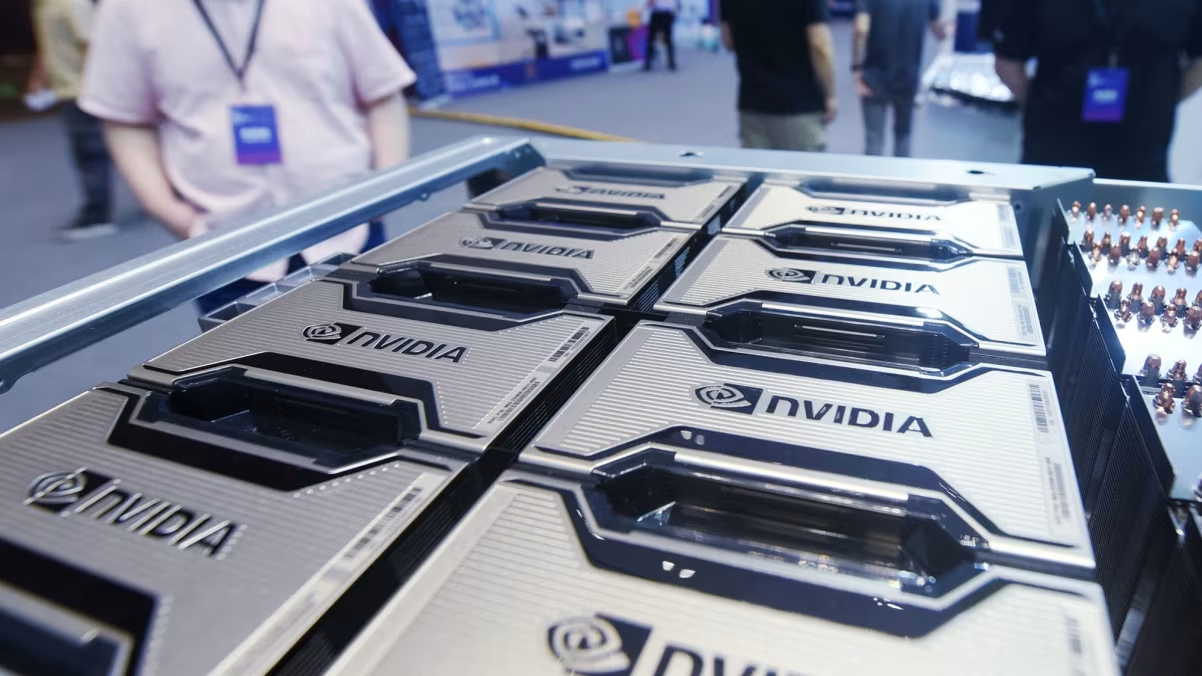
Despite being placed on a US government blacklist, several Chinese universities with reported ties to the country’s military have managed to obtain restricted computer chips made by Nvidia.
At least six Chinese universities have reported purchasing Nvidia chips in recent years, including two institutions that disclosed acquisitions of powerful processors within the past few months. The findings come from an investigation by CNN, which examined university purchasing records and other documents detailing transactions involving restricted technology.
Some of the most notable transactions involved Harbin Institute of Technology and Northwestern Polytechnical University, two institutions known for their connections to China’s People’s Liberation Army.
Both belong to a group commonly referred to in China as the “Seven Sons of National Defence.” The universities are associated with research and academic activities linked to the country’s national defence sector.
According to documents reviewed by CNN, Harbin Institute of Technology reported obtaining an Nvidia A100 chip in September for approximately $7,000.
Northwestern Polytechnical University also appeared in the purchasing records. The institution reportedly acquired four Nvidia H200 chips during September and October, with the combined value of the transactions reaching approximately $240,000.
Another institution connected to the same group, Beihang University in Beijing, has also reported multiple acquisitions of Nvidia hardware. Records indicate that the university made more than a dozen purchases between 2022 and 2024, primarily involving A100 and A800 processors.
How Restricted Nvidia Chips Reach Chinese Buyers
The transactions identified in the investigation were not reportedly conducted directly through Nvidia or its major suppliers.
Instead, the universities obtained the processors through relatively obscure Chinese companies, making it more difficult to establish how the hardware entered the market and where it originally came from.
Some could have come from existing inventories accumulated before Washington introduced export restrictions. Others may have entered China through smuggling networks, shell companies and falsified documentation designed to conceal the actual destination of the products.
This creates a significant enforcement challenge for American authorities. Even when restrictions prevent manufacturers and authorised distributors from selling certain processors directly to blacklisted institutions, those measures become harder to enforce once the hardware is already inside China.
According to experts, preventing the resale of these products after they have entered the country can be extremely difficult.
US Export Controls Face Growing Enforcement Challenges
The findings come as the US administration attempts to close loopholes that have allowed advanced artificial intelligence technology to reach Chinese buyers despite Washington’s restrictions.
Controlling their distribution has therefore become an important part of US efforts to limit China’s access to sensitive technology.
Companies operating through intermediaries, existing inventories and potentially illegal distribution networks can make it difficult for authorities to determine who ultimately receives restricted hardware.
There are also limitations to what the investigation was able to establish. CNN noted that the purchasing records it obtained may not cover every transaction involving Chinese universities. The news organisation also said it could not independently confirm whether the chips had been delivered in every reported case.
While export controls can limit direct sales, the continued appearance of restricted Nvidia processors in purchasing records suggests that preventing their circulation through unofficial channels remains a difficult task.