Iran has issued a fresh warning to the United States and Israel, saying that any new threat or military action against the country would trigger an immediate and powerful response. The statement comes amid growing regional tensions, reports of possible renewed military operations, and diplomatic efforts aimed at preventing another escalation.
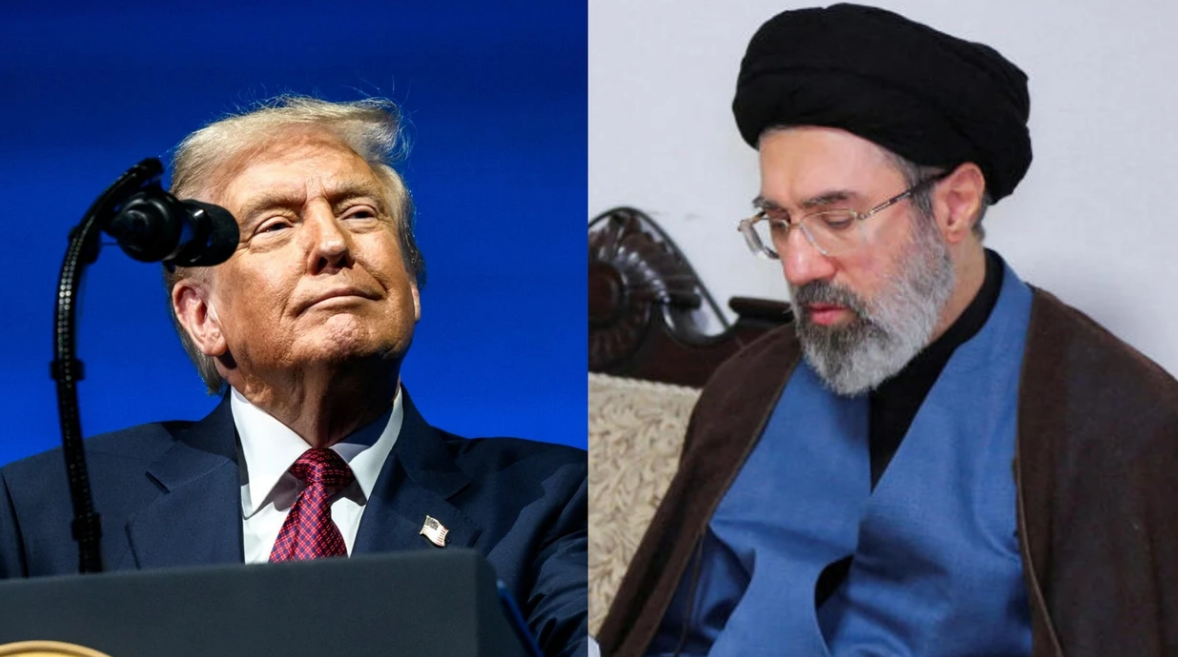
Iran’s Supreme Leader, Mojtaba Khamenei, reportedly warned that Tehran would not limit its response geographically if the country came under attack. His remarks were directed at both Washington and Tel Aviv as military and diplomatic developments continue to shape the situation in the Middle East.
“Any level or form of threat must be met with an immediate, powerful response without geographical limitations,” Khamenei declared.
According to Iran’s state news agency IRNA, Khamenei met with senior military commanders on Saturday and instructed them to strengthen preparations for a possible new confrontation with the United States and Israel.
During the meeting, the Iranian leader reportedly emphasized the need for military readiness and called for an update to the country’s list of potential targets. The revised list is expected to include American and Israeli assets that Iranian forces could target if hostilities resume.
Khamenei also made clear that Iran would not allow its adversaries to determine the course of a future conflict. According to his statement, if military or terrorist attacks against the country begin again, Iran’s armed forces and population will decide when and under what conditions the confrontation ends.
The instructions come as Washington and Tel Aviv are reportedly considering additional military options against Tehran. Although no final decision on another operation has been publicly confirmed, reports of possible renewed strikes have added to uncertainty across the region.
Iran Signals Readiness to Respond With New Weapons
The warning from Khamenei was accompanied by similarly strong statements from other senior Iranian officials.
Mohsen Rezaei, head of Iran’s Supreme National Security Council, confirmed that he had received a letter from US Vice President JD Vance containing a proposal for negotiations.
However, Rezaei also issued a warning about the consequences of another military operation against Iran. He said that any new attack would be met with what he described as devastating strikes against the aggressor, adding that Iranian forces could use new weapons.
Iranian officials have repeatedly presented military preparedness as a central part of their national security position. The latest statements reinforce that approach, particularly as uncertainty continues over Washington’s next steps.
For the United States and its regional allies, the possibility of a wider Iranian response remains an important consideration in assessing the consequences of further military action.
Qatar-Mediated Negotiations Offer a Possible Diplomatic Opening
Despite the increasingly confrontational language, there have also been indications of movement on the diplomatic front.
Iranian Foreign Minister Abbas Araghchi described recent American efforts to open a dialogue as a positive development. His comments followed reports that US Vice President JD Vance had sent a letter proposing negotiations with Iranian officials.
Qatar has been playing an important role in facilitating communication between Tehran and Washington. Its involvement has provided both sides with a channel to discuss possible arrangements without necessarily holding direct negotiations.
According to reports on the latest diplomatic developments, Iranian representatives and Qatari mediators have continued discussions in an effort to reach an agreement and prevent another escalation.
Araghchi has indicated that the discussions are progressing, although important differences remain between the two governments. Iran has not announced a final agreement with Washington, and the conditions for any potential negotiations remain a significant issue.
Nevertheless, Tehran has made clear that positive diplomatic signals do not mean it is abandoning its military preparations.
Strait of Hormuz Remains a Key Issue in Negotiations
One of the most important subjects in the discussions between Iran and international mediators is the future of the Strait of Hormuz.
Araghchi said Iran could agree to reopen the strategic waterway within two days under a proposal currently being discussed. The possibility represents a significant development, given the importance of the strait to international shipping and global energy markets.
However, Tehran has attached specific conditions to how maritime traffic would operate if the waterway reopened.
Iran insists that vessels passing through the Strait of Hormuz should follow a designated maritime corridor agreed upon with Oman. It also wants the passage of ships to take place under Iranian management.
Mohsen Rezaei has reinforced this position, indicating that Iran expects to retain an important role in overseeing maritime movements through the area.
Why the Strait of Hormuz Matters
The Strait of Hormuz is one of the world’s most strategically important maritime passages. It connects the Persian Gulf with the Gulf of Oman and the Arabian Sea, providing a major route for international oil and gas shipments.
Any disruption to shipping through this narrow waterway can have consequences far beyond the Middle East. Energy markets, international trade and countries dependent on imported oil can all be affected by developments in the region.
For that reason, the possibility of reopening the strait has become an important element of diplomatic discussions involving Iran and its international partners.
An agreement on maritime access could help reduce some of the immediate economic and security concerns surrounding the confrontation. However, disagreements over management, navigation rights and the conditions for reopening the passage remain unresolved.