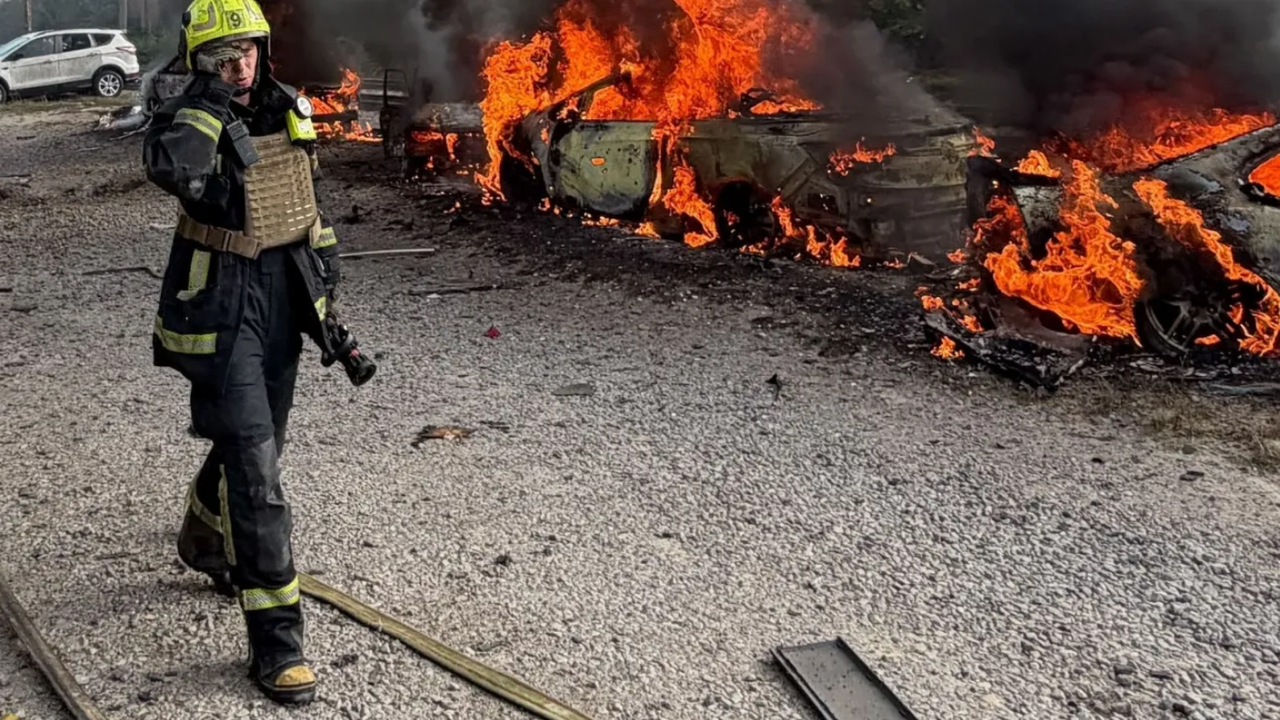
At least 13 people have been killed and five others injured after a Russian drone struck a railway station in the Ukrainian city of Dnipro, hitting a platform where a passenger train bound for Zaporizhzhia was standing. The attack adds to growing concerns about the safety of civilian transport infrastructure as Russia and Ukraine continue to intensify their aerial campaigns against each other.
The regional governor, Oleksandr Ganza, announced the initial casualty figures in a post on Telegram, reporting at least 13 fatalities and five injuries. Boris Filatov, the mayor of Dnipro, separately confirmed that a passenger train had been struck during the incident.
Ukraine’s state railway company also reported that a Russian drone hit the platform where the train bound for Zaporizhzhia had stopped. The incident highlights the vulnerability of railway stations, trains and other public transport facilities during a conflict increasingly shaped by long-range drones and missile attacks.
According to Ukrainian authorities, the drone struck the railway station platform while a passenger train was stopped before continuing its journey toward Zaporizhzhia. The attack resulted in multiple deaths and injuries, although the initial reports did not provide a complete account of the circumstances surrounding each casualty.
Initial casualty figures can change as emergency services assess the scene and authorities gather additional information. The early announcements did not establish the full extent of the damage or provide a detailed explanation of how the drone reached the station.
Why Dnipro and Its Railway Connections Matter
Dnipro is a major city in central-eastern Ukraine and an important transport and industrial hub. Its railway connections link the city with other parts of the country, including areas closer to the front lines.
Zaporizhzhia, the destination of the train involved in the incident, is another strategically important Ukrainian city that has faced the consequences of the wider conflict. Rail services remain significant for civilian mobility, particularly when road travel is disrupted or longer journeys require dependable transport links.
The strike also raises broader questions about how civilian infrastructure can be protected as the use of unmanned aerial vehicles becomes more widespread. Drones can travel considerable distances, and defending populated areas requires authorities to identify and respond to potential threats before they reach their intended destinations.
Russia and Ukraine Intensify Aerial Attacks
The deadly strike in Dnipro occurred amid a broader escalation of drone and missile attacks between Russia and Ukraine. Both countries have increasingly relied on unmanned aircraft as part of their military operations, with attacks reported across multiple regions.
Russian forces have repeatedly launched aerial attacks against Ukrainian territory, while Ukrainian forces have also conducted drone operations targeting locations inside Russia. These campaigns have placed air-defence systems under sustained pressure and increased the risks facing civilians far from the immediate front lines.
The latest reports from Dnipro emerged alongside Russian claims of a large Ukrainian drone operation targeting the Moscow region.
Moscow Reports Hundreds of Ukrainian Drones
Moscow Mayor Sergei Sobyanin said that more than 600 Ukrainian drones had been directed toward the Russian capital region during the overnight period extending from Wednesday into Thursday.
According to Sobyanin, Russian air-defence systems intercepted or destroyed many of the incoming unmanned aircraft before they could reach their intended targets. He claimed that 613 drones had been directed toward the Moscow region, with 231 destroyed while approaching the capital.
The figures were reported by Russian authorities and have not been independently verified. The announcement did not, by itself, establish the full extent of any damage or confirm the overall effectiveness of the reported interceptions.
Drone attacks can force authorities to activate air-defence systems, issue warnings and temporarily disrupt normal activities. Their consequences depend on the locations targeted, the weapons involved and whether aircraft are intercepted before reaching populated areas or infrastructure.
Additional Russian Strikes Reported in Ukraine
The attack in Dnipro was not the only incident reported by Ukrainian authorities during the night. Officials also reported a Russian strike in the Rivne region, where one man was killed.
The reported death added to concerns about the wider impact of aerial attacks on civilians across Ukraine. Although the available information did not provide extensive details about the Rivne incident, the report indicated that the consequences of the overnight strikes extended beyond Dnipro.
For railway passengers and other civilians, the uncertainty surrounding attacks can make everyday activities increasingly difficult. Transport hubs, residential areas and essential services all depend on a level of security that is difficult to maintain during sustained aerial campaigns.
Peace Talks Loom as Attacks Continue
The latest escalation comes at a sensitive moment for diplomatic efforts aimed at ending the war. Talks between Russia and Ukraine were expected to resume with mediation from the United States, raising questions about whether negotiations could make progress while military operations continue.
The timing presents a challenge for diplomats seeking to reduce hostilities. Deadly attacks involving civilian casualties can increase political pressure, deepen mistrust and make negotiations more difficult, particularly when the two sides continue to exchange strikes.
At the same time, the prospect of renewed discussions highlights the importance of efforts to establish a path toward reducing the violence. Any meaningful progress would need to address the central disagreements between Moscow and Kyiv while creating conditions for civilians to live with greater security.
As Russia and Ukraine continue their aerial campaigns, the effects extend beyond military objectives to the transport networks and communities that sustain civilian life. Whether renewed diplomatic efforts can reduce the frequency and severity of such attacks remains uncertain, but the latest casualties underline the human cost of a conflict that continues to affect people across both countries.