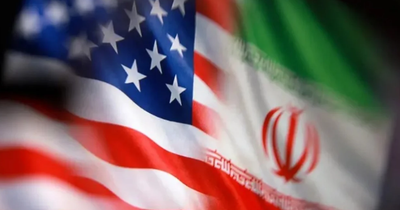
The United States has launched airstrikes on Iran’s Qeshm Island near the Strait of Hormuz, US officials said.
Iran’s state-run IRNA news agency also reported several explosions on the island, although details about the extent of the damage and the specific targets were not immediately available.
US officials described the operation as limited in scope, explaining that it was launched in response to what they said were actions by Iran’s Islamic Revolutionary Guard Corps (IRGC) targeting an American aircraft.
The strikes come ahead of the US midterm elections, which will determine whether Republicans or Democrats control Congress.
The reported airstrikes on Qeshm Island represent another significant development in a conflict that began in February, when the United States and Israel launched attacks against Iran.
Since then, the confrontation has placed increasing pressure on regional security, international energy markets and diplomatic relations across the Middle East.
Qeshm is particularly important because of its location in the Strait of Hormuz, one of the world’s most strategically significant maritime passages. The narrow waterway connects the Persian Gulf with the Gulf of Oman and serves as a major route for international oil and gas shipments.
Any military escalation in the surrounding area carries consequences beyond the immediate parties involved. Disruptions to shipping or threats against commercial vessels could affect energy supplies, increase transportation costs and create uncertainty in global markets.
Although American officials characterized the latest operation as limited, the location of the strikes is likely to attract attention from regional governments and international observers.
Trump Faces Growing Pressure Ahead of Midterm Elections
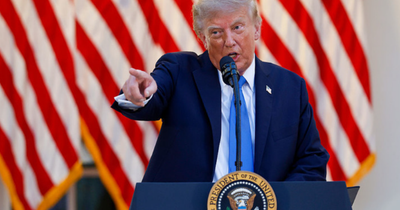
The timing of the strikes is especially important for Trump, who has faced declining approval ratings in recent polling and increasing pressure from members of his own Republican Party to bring the conflict to an end.
The midterm elections will determine whether Republicans retain control of Congress or whether Democrats gain enough seats to take control of one or both chambers.
A shift in congressional control could make it more difficult for the administration to advance its legislative priorities and could increase scrutiny of its handling of the war with Iran.
Trump has repeatedly suggested that Iran has suffered substantial economic damage and that the United States has already achieved significant objectives.
Speaking to reporters earlier on Monday, the president indicated that additional attacks were not necessarily required at this stage.
In an interview with Axios, he argued that the United States had severely weakened Iran’s financial position and that the country’s population was becoming increasingly exhausted by the situation.
“One way or another, we’re going to do something, but there’s no rush. We’ve crippled them financially. They have no money, no gas, and their people are getting very tired of this,” Trump said, according to Axios.
His remarks appeared to signal that Washington was not necessarily seeking an immediate expansion of military operations, despite the latest reported strikes.
However, the decision to carry out another attack demonstrates that the administration remains prepared to use military force when it considers American interests or personnel to be threatened.
He also said the US “may have to take action against Pickaxe,” a website linked to Iran’s nuclear program, in an interview with Fox News.
Trump added that this was “not a big deal” and could be done within “an hour.”
The reference to Pickaxe comes amid continued international concerns about Iran’s nuclear activities and the possibility that the conflict could expand to include infrastructure associated with the country’s nuclear program.
However, Trump did not provide further details about what specific action Washington might take or when such an operation could occur.
The remarks also came as speculation continued to grow that the United States could resume more extensive military operations against Iran after the midterm elections.
Some observers have suggested that the administration might be considering a more aggressive approach once the immediate political pressure surrounding the vote has passed.
Trump, however, rejected that possibility when asked directly by a reporter on Monday whether major attacks were expected after the elections. His response was simply: “No.”
That answer offered little clarity about the administration’s longer-term military strategy but appeared intended to push back against suggestions that a larger offensive had already been planned.
Iran Says Intensive Negotiations With Washington Are Underway
Despite the renewed military activity, diplomatic efforts to end the conflict appear to remain active.
Iranian Foreign Minister Abbas Araghchi said earlier that Tehran and Washington were engaged in “very intensive” discussions through intermediaries in an effort to bring the war to an end.
Indirect negotiations are particularly important because the United States and Iran have not established a direct diplomatic process capable of resolving the major disagreements between them.
Regional intermediaries have therefore played an important role in carrying messages, exploring possible compromises and attempting to prevent further escalation.
Araghchi also said that Tehran was prepared for diplomatic and military scenarios “more than ever before” and that it was up to the United States to choose between a “wise path” of negotiations and “the mistake of military aggression.”