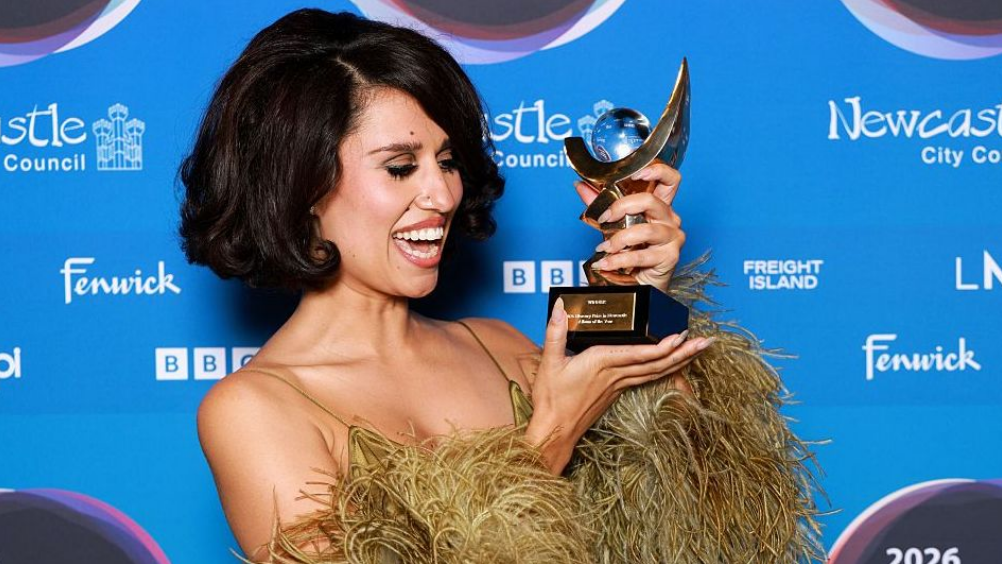
British singer Raye has won the prestigious 2026 Mercury Prize for her second album, This Music May Contain Hope. The victory marks another major milestone in the singer’s career, placing her among the most celebrated artists in British music.
Raye received the award on October 22 during a ceremony at Newcastle’s Utilita Arena, where she competed against 11 other shortlisted artists, including music legends and some of the biggest names in contemporary British music. Among the nominees were Paul McCartney, Florence + The Machine, Olivia Dean, Suede, Dave, and JADE.
The announcement came during one of the most anticipated events on the British and Irish music calendar. Hosted by broadcaster Lauren Laverne, the ceremony brought together 12 shortlisted artists whose albums had been selected for their outstanding musical achievements.
Raye ultimately emerged as the overall winner, receiving the trophy from broadcaster and DJ Sian Eleri, who presented the award on behalf of the judging panel.
“I cannot tell you how grateful I am to be holding this. I’m shaking, I’m jet-lagged, I’m tired, I’m grateful!” Raye said during her acceptance speech.
For the singer, receiving recognition for a complete body of work carried particular meaning. Raye explained that she had always believed in the importance of albums and felt especially thankful to have her artistic vision acknowledged.
She also spoke about the central message behind her winning record, emphasizing that hope is something people everywhere need, regardless of their circumstances.
“Hope is a very cheesy word, especially for us British people, we don’t do that deep stuff, but hope is something we all need,” she said, expressing her wish that the album’s message would reach anyone who might need encouragement.
Why ‘This Music May Contain Hope’ Impressed the Judges
Released in March 2026, This Music May Contain Hope represents an ambitious creative project that explores different musical influences while maintaining a consistent emotional direction.
The album is divided into four sections, bringing together elements of jazz, soul, R&B, classical music, and orchestral pop. Its sound also incorporates influences associated with old Hollywood glamour, creating a cinematic atmosphere that complements the personal stories told throughout the record.
The Mercury Prize judging panel praised the record for its ambition, structure, and originality, highlighting the way the singer moves beyond traditional genre boundaries.
The judges described the album as a joyful and hopeful work that tells the story of a young woman navigating the everyday challenges of life and relationships.
They also praised Raye’s imagination and artistic vision, suggesting that the album demonstrates the continuing creative possibilities of the traditional album format.
Its 73-minute running time allows the singer to develop a broader musical narrative rather than simply presenting a collection of individual tracks.
That ambition ultimately helped distinguish the record from the other highly regarded albums competing for this year’s award.
A Major Career Milestone for the British Singer
The Mercury Prize victory adds another significant achievement to Raye’s growing list of career accomplishments.
Born Rachel Keen in West London, the singer initially gained attention through songwriting and collaborations with established artists. She also became widely recognized for her work as a featured vocalist on several successful pop and dance tracks.
However, her journey toward becoming an internationally recognized solo artist was not always straightforward.
In 2021, Raye publicly criticized her former record label, explaining that restrictions surrounding her recording career had prevented her from releasing the debut album she wanted to make.
She subsequently separated from the label and pursued greater creative independence.
That decision eventually led to the release of her debut album, My 21st Century Blues, in 2023. The record became a major turning point, earning widespread recognition and helping establish her as one of Britain’s most distinctive contemporary performers.
The album also brought her extraordinary success at the 2024 BRIT Awards, where she collected six trophies in a single ceremony, setting a record for the most wins by an artist at the event.
Winning the Mercury Prize also represents a particularly meaningful achievement because My 21st Century Blues had previously been shortlisted for the same award in 2023 but did not win.
Among the most recognizable names were former Beatles member Paul McCartney, Florence + The Machine, Olivia Dean, Suede, and rapper Dave.
McCartney received his first Mercury Prize nomination for The Boys of Dungeon Lane, while Florence + The Machine competed with Everybody Scream.
Other shortlisted albums included Olivia Dean’s The Art of Loving, Suede’s Antidepressants, and Dave’s The Boy Who Played the Harp.
The full shortlist also featured Dove Ellis, JADE, Knats, Kojey Radical, Nia Archives, and the charity compilation HELP(2) from War Child Records.
Several nominated artists performed during the ceremony, giving audiences an opportunity to experience music from the shortlisted albums.
Raye also took to the stage, performing “I Hate The Way I Look Today” from her winning record alongside a full big band. Her performance received a standing ovation.
The competition demonstrated the range of musical styles represented in contemporary British and Irish music, from alternative rock and hip-hop to soul, electronic music, and orchestral pop.
A £25,000 Prize and a Boost for Raye’s Music
Alongside the prestigious trophy, Raye received a cash prize of £25,000, adding a financial reward to an already significant professional achievement.
The Mercury Prize, established in 1992, recognizes outstanding albums by British and Irish artists. Unlike awards that primarily focus on commercial success, its judging process places considerable emphasis on artistic quality, originality, and the overall strength of an album.
Winning the award can also introduce an artist’s work to new audiences and generate renewed interest in their music.
That effect was already becoming visible following Raye’s victory.
According to the British Phonographic Industry (BPI), sales of This Music May Contain Hope increased by 275% following the announcement. The album also climbed from No. 88 to No. 11 in the midweek Official Albums Chart.
Her single “Where Is My Husband!” experienced a chart improvement as well, rising from No. 51 to No. 31 in the midweek Official Singles Chart.
The figures underline the impact that a major industry award can have on an artist’s commercial performance, even when the winning album has already achieved considerable success.
For Raye, however, the recognition represents more than another trophy or a boost in album sales.
Her Mercury Prize victory celebrates the creative independence she fought to achieve and the deeply personal music that emerged from that journey. With This Music May Contain Hope, she has delivered a record built around musical experimentation, emotional honesty, and a message that resonates far beyond the stage.