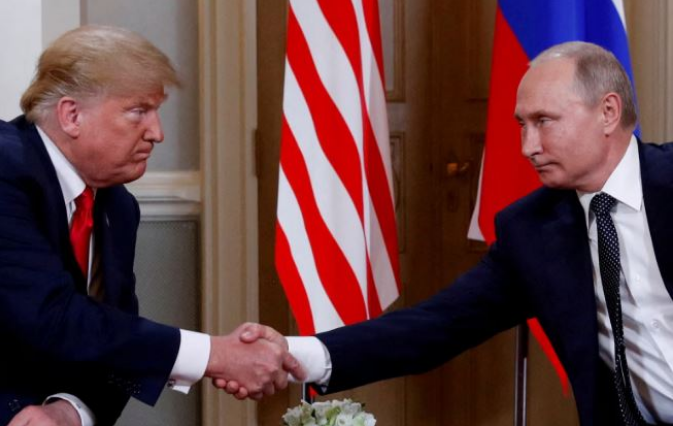
Seven oil tankers carrying approximately 288,000 tons of Russian crude oil are currently making their way toward the United States as part of a controversial agreement between U.S. President Donald Trump and Russian President Vladimir Putin. However, it remains unclear whether the vessels will be allowed to unload their cargo once they reach American waters, amid growing questions over the legality of the shipments and the political consequences of easing restrictions on Russian oil.
The shipments represent the first stage of an unexpected arrangement that could mark a significant shift in Washington’s approach to Moscow. After years of economic restrictions imposed on Russia following its full-scale invasion of Ukraine, the agreement would temporarily allow certain Russian oil deliveries to reach American markets under a six-month sanctions waiver announced by Trump.
The environmental organization says its investigation provides a more complete picture of the shipments than earlier reports, which had identified only three vessels departing from Russian oil terminals in the Baltic Sea.
To establish the movements of the ships, Greenpeace combined information from several sources, including maritime tracking websites and shipping data. The organization believes this broader monitoring effort has helped identify the full group of vessels involved in the initial deliveries.
Shaun Burnie, an energy specialist at Greenpeace Ukraine, said that identifying the tankers and establishing their locations should make it possible for American authorities to intervene before the oil reaches its destination.
He argued that the shipments should be stopped by the U.S. Congress or relevant local authorities now that the vessels can be tracked.
The seven ships are not all at the same stage of their journey. One of the vessels, named Taurus, was already relatively close to the United States when the Greenpeace investigation was first published.
Several of the remaining tankers were reported to be near British waters, while three were sailing through or approaching the English Channel.
Their different positions illustrate the scale of the operation and the international shipping routes being used to transport Russian crude across the Atlantic.
However, reaching the United States does not necessarily mean that the ships will be permitted to unload their cargo. The legal status of the shipments remains a central issue, particularly given the sanctions that have restricted Russian energy exports since the beginning of the war in Ukraine.
Trump and Putin Agreed to a Major Russian Oil Supply Deal
The shipments are connected to a broader agreement announced on October 9, when Putin reportedly agreed to supply the United States with 1.8 million tons of oil.
The initial arrangement included 300,000 tons scheduled for delivery immediately, with the seven identified tankers accounting for approximately 288,000 tons of that first shipment.
To make the deliveries possible, Trump announced a six-month waiver from existing sanctions that would allow the specified Russian oil transactions to proceed.
Since Russia launched its full-scale invasion of Ukraine in February 2022, the United States, European Union and United Kingdom have introduced multiple rounds of economic measures designed to limit Moscow’s access to international markets and reduce the revenue available to finance its military operations.
The latest arrangement therefore represents a notable change in the administration’s approach to Russian energy exports.
Why Trump Wants Russian Oil Back in the U.S. Market
Trump has defended the agreement by arguing that additional oil supplies could help bring down energy prices for American consumers.
Oil prices can influence the cost of gasoline, transportation and numerous other goods and services, making energy affordability an important political issue in the United States.
Increasing the amount of crude available to the market could, in theory, help ease supply pressures and contribute to lower prices. However, the actual impact depends on several factors, including global demand, production levels, refining capacity and international market conditions.
The early figures cited in the original report do not suggest that American consumers have seen an immediate benefit.
According to the American Automobile Association (AAA), the price of a gallon of gasoline increased from $6.28 around the time the agreement was announced to $6.33 afterward.
Although such a small change does not establish whether the agreement will ultimately affect fuel prices, it highlights the uncertainty surrounding claims that the Russian shipments will provide immediate relief at the pump.
Ukraine Condemns the Agreement Over Concerns About Russia’s War Funding
The agreement has drawn strong criticism from Ukrainian President Volodymyr Zelenskyy, who warned that allowing Russia to generate additional revenue from oil exports could undermine efforts to pressure Moscow into ending the war.
For Kyiv, the central concern is not simply the commercial value of the shipments but what Russia could do with the money earned from selling its oil.
Energy exports remain an important source of revenue for the Russian government. Additional income could help support public spending, military operations and other activities connected to the country’s ongoing invasion of Ukraine.
Zelenskyy has repeatedly called on Western governments to maintain pressure on Moscow rather than introduce measures that could provide economic relief to the Kremlin.
Reacting to the broader diplomatic arrangements, the Ukrainian president warned that negotiations conducted without sufficient pressure on Russia could strengthen its position.
“Secret agreements gave Putin more chances on the battlefield,” Zelenskyy said.
His remarks reflect Kyiv’s concern that easing sanctions could weaken one of the main economic tools Western governments have used to discourage Russian aggression.
The Future of the Shipments Remains Uncertain
Despite the agreement between Trump and Putin, the arrival of the seven tankers does not guarantee that their cargo will enter the American market.
Questions surrounding the legal framework of the sanctions waiver, the conditions attached to the agreement and the authority of American institutions to intervene could complicate the process.
Greenpeace has urged U.S. lawmakers and local authorities to examine the shipments and consider measures to prevent the vessels from unloading.
For now, the tankers’ movements remain an important test of the agreement’s practical implementation.
Whether the vessels will successfully deliver their cargo could offer a clearer indication of how far the Trump administration is prepared to go in easing restrictions on Russian energy exports, even as the war in Ukraine continues.